Saturday, July 8, 2017

They Killed Fritz! A Review of Unfiltered: The Complete Ralph Bakshi

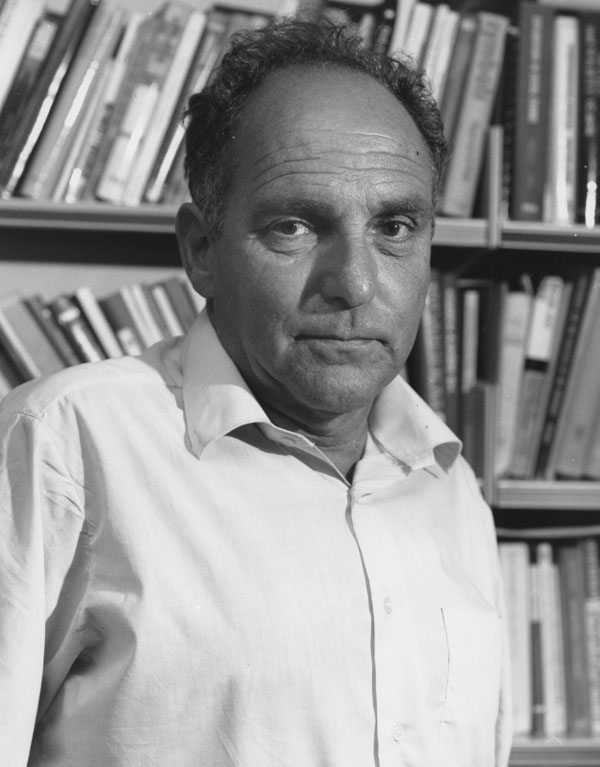
Ralph Bakshi

This beautifully illustrated book covers the life and work of Ralph Bakshi, one of the great post-WWII artists. Bakshi work covers the whole of modern art: from ashcan realism to abstract expressionism, from doodling with a number 2 to acrylics and oils to bricolage made possible only with cutting edge technology. Bakshi is such a capital "G" Great that I feel the need to frame him up with a capital "Q" Question.

What can art do? No artist has ever stopped a war, not artist has ever saved an old lady from cardiac arrest, no artist has ever cured a child's cancer. Maybe art can feel good, but so can drugs and masturbation. Maybe most art is a masturbatory drug, conning the audience into thinking they've done something when all they've done is lost another day and gained another pound.

If human beings were "perfectly logical" (whatever that means) and everything was explicit, maybe art would be useless. But as philosophers have hammered on us for hundreds of years, everything is not explicit. The tissue of every society is made of norms: unspoken rules, prejudices, superstitions, hypocrisies and methodologies. Most of these are implicit and unspoken. Art has the power to expose and affect the unofficial rules.

Ralph Bakshi as an artist whose greatest goal is exposing the unspoken norms of life. It's certainly a theory.

Ralph Bakshi, Unknown Photoboming Child and Ralph Radino at Coney Island

Bakshi grew up in Brownsville, Brooklyn, New York, New York, USA as it transformed from a Jewish ghetto to a Black one. Even when Bakshi began his life in Brownsville in 1939 boys from the burg had made good and bad: The Horowitz brothers had broken free of of their violent boss and formed the greatest slapstick group of all time: The Three Stooges. The vicious organized crime rings led by Meyer Lansky and Benjamin Siegel ruled the streets with an iron fist. Aaron Copland premiered his first ballet. Abe Reles's "Murder, Inc." hitman racket killed their thousandth man. Danny Kaye had his first success on stage.

Paul Terry

Bakshi's first job in the art world (how oxymoronic that sounds now) was at Paul Terry's Terrytoons. Terry had sold the place wholesale to CBS the year before, betraying a lifetime of handshake contracts. CBS put the modernist Gene Deitch in charge of new production. Deitch had left Jam Handy (they made most of the shorts you see on MST3K) for the new world of TV, where he hoped that UPA style would allow him to be creative and on budget. What Deitch didn't know was that Terry had forced CBS to take on Bill Weiss as manager of Terrytoon's existing catalog. Weiss proceeded to do everything in his power to hobble the studio (he had been on the receiving end of many a handshake).

Bakshi was in the best of worlds and the worst of worlds at Terrytoons. He was under the wing of some great old-timers: Connie Rasinski, Jim Tyer, Bob Kuwahara. But Deitch and TV were going the way of UPA. Bakshi wanted to make cartoons with the life and energy he experienced in Brooklyn, he wanted to animate mass quavering with weight, he wanted crooked & pulsating lines.

It was tough but he was learning. The first cartoon Bakshi helped animate did have one thing that he wanted to bring to the screen - ethnicity:


But overall, Terrytoons was cramping. Through a suspicious miracles (that turned out to be hot air) Bakshi ended up in charge of Paramount's animation division. He directed a series of barely released theatricals as semi-pilots for TV shorts.


What Bakshi didn't know was that, like Bill Weiss at Terrytoons, Burt Hampft at Paramount wasn't looking for a director to take his studio to greatness, he was looking for one to take it to the grave. The money was in syndicating existing cartoons, not producing new ones.

Bakshi was scooped up by another executive, Steve Krantz - an independent. Krantz needed a warm body to produce some animation properties he sort of owned: Rocket Robin Hood and, of course, Spider-Man.


Krantz dangled to Bakshi an irresistible lure - Bakshi's name on the studio door. No boss, only customers. It was garbage of course - Krantz horded the money for himself and Bakshi Studios was at the mercy of the network. Then, in 1969, Bakshi did something nobody saw coming, a goal so lofty nobody even aspired to it. He made a movie.


Fritz The Cat is the best entry into the Bakshi experience. It's not a terribly pleasant movie. Fritz is a shiftless, unpleasant, naively misogynistic hippie. If you want to know why people hate David Crosby watch this movie for a few minutes. Fritz in the comics was even worse. R. Crumb is profoundly fucked up.

What makes Fritz so fascinating then? One is Bakshi's idea to use live recordings of non-actors. The movie begins with a construction worker worried that his daughter is sleeping with an unpleasant hippie. In real life, the man speaking was a construction worker shootin' it with Bakshi in a bar after work. Bringing that level of reality into a movie is impossible. But Bakshi had an advantage that John Cassavettes didn't - Bakshi was working with animation. Bakshi had a level of control and timing that no live action director could possibly have. And so Fritz The Cat is more real than a live action movie could possibly be.

The backgrounds of Fritz The Cat are beautiful. By collecting mountains of reference photos and with colossal command of acrylics, Bakshi were able to fuse the structure of Ashcan Realism and the emotional coloring of Impressionism. The movie features wonderfully fluid animation from veterans - Irv Spence (who did most of the Tom & Jerry shorts), Jim Tyer, etc. While Disney was going around telling everyone how what an animated film needed was a big time producer, Bakshi was getting better animation for less than a million dollars. The House of Mouse came out with Robin Hood, the recycled animation movie, the next year for six times the budget. It didn't make a third of what Fritz made.

I guess I should say another few words about R. Crumb. I can see why Crumb acts the way he does - acts like the movie is some stain on his reputation. Says idiotic, patently false things like the movie is "red neck". You see Fritz is Crumb. Fritz is what Crumb wanted to be. This says very bad things about Crumb - Crumb's version of Fritz is a rapist. Bakshi's Fritz is just unfaithful - even disapproves of rape. Wikipedia gives this quote of Crumb "They put words into his mouth that I never would have had him say.". This refers specifically to Fritz quoting The Beatles. R Crumb, an old school jazz fan, hated rock and The Beatles. Fritz liking rock music is - to Crumb - worse than being a rapist. In theory, Crumb could be honest. He could say that he didn't want to give Fritz to someone else because he identified with the dipshit too much, that he was bullied by his wife into selling the rights for Serious Cash (millions) and that his feud with Bakshi (Crumb shunned any artist who worked with Bakshi) was childish.

If you think he'd do that, you don't know R. Crumb. Lucky you.


Let's skip ahead now to Bakshi's most incendiary movie, Coonskin. It was originally titled Coonskin No More and that is a so crazy better title, holy shit. The movie would have made it with that title. Bakshi's movies were being destibuted by schlockmeisters like the blacksploitation kingpin Jerry Gross and the infamous Samuel Z Arkoff.

Satire is the art of using comedy to bring out the norms of society. Coonskin is a satire on race relations. Blazing Saddles is another one. The difference between Coonskin and Blazing Saddles is despite the fact Blazing Saddles has some naughty words, it lets everyone off easy.


Blazing Saddles is one of the gentlest and kindest movies ever made. Gene Wilder plays The Waco Kid (whom the script tries to tell us is an old alcoholic ex-murderer) with such sweetness I could see ISKCON using him as a model for the young Krishna. Cleavon Little plays his character as Bugs Bunny - the right choice comedically but it makes it hard to see him as a victim of racism. Gene Wilder and Cleavon Little have such real and warm friendship that you could toast bread on it. The movie isn't fun because it's incendiary or because it has such deep things to say about race, it's fun because you can see a lot of warm, fun people singing songs, tell jokes, use naughty words and get into naughty situations. By the end of Blazing Saddles, blacks and whites are owning land and living together in peace and harmony. In the real world, the Pre-WWII Solid South was practically a 3rd World Country because the elites in control of her would rather grind her into dust than allow a black man to have a factory job.


Even worse in this regard is the movie In The Loop, which is very funny but a total whitewash on the UK's role in Iraq. In the movie, the UK characters are all very torn on the war and it weighs on their conscience that they "have to" start a war to appease the insane Americans. Of course, this is complete horseshit - the UK administration at the time was very pro-war. The movie tires to tie this to the American character, Americans will start a pointless land war in Asia but won't swear. They don't even know the difference between an Englishman and a Scot, the idiots! Okay, sure, Malcolm Tucker is just as much a warmonger ... but at least he swears. It's a total pat on the back.

That said, the Elephant Man reference from In The Loop is just about the funniest thing ever.

Coonskin isn't a very funny movie. It is occasionally funny, but it is much more gross, mean and disturbing. Laughter comes from a place of comfort, whatever comedians try to tell you. Laughter is comforting. Coonskin is a satire in the sense that it uses cartooning and exaggeration to get at the ugly norms of society, but it isn't a satire in the sense that it's laugh-a-minute. Coonskin lets nobody off - not cops, not liberals, not activists, not the church, not the blacksploitation heroes that make up its lead characters and especially not the mafia. It's a gross, bleeding, waling movie. The "Melvin The Roach" sequence is one of the greatest vignettes in any movie.

I suppose I gotta talk about the controversy around this one. I'm against censorship, of course, but I do see why someone might morally object to this movie. This is a movie that exposes society's norms, but if your goal is to change those norms this might not be the best strategy.


After Coonskin, Bakshi was stuck in a weird place. No matter what Quentin Tarintino tells you, people didn't go to Grindhouse theaters to be challenged. We didn't really think about the gore any more than in Tom & Jerry. Besides that, a lot of those theaters were in black neighborhoods and "racist" was not a good look, sales-wise, even if it was bullshit. Bakshi decided for his next movie he'd do it all metaphorically, in a fantasy world. He could have the same morals and less people would bring their baggage. At the same time, a weird young arty hippie director was reeling from his failure to get his big idea - a violent mockumentary about Vietnam shot while the war was in progress - off the ground. He had a new idea for a Roger-Corman-esque low budget SF epic. This weirdo and Bakshi both pitched to the same person, Alan Ladd Jr at Fox. Bakshi's pitch was titled War Wizards. The other guy's pitch was Star Wars.

One of these movies did a little better than the other.

Is Wizards a ... good movie, strictly speaking? Well, it's okay if you're in the mood for it. Old school SF stuff. Very New Wave and trippy. But you can tell that the movie lost it's budget halfway through. This is when Bakshi began rotoscoping. Nowdays you CGI rotoscope an SF movie and you get a billion dollars, but Bakshi wasn't so lucky. Rotoscoping allowed Bakshi to make a New Wave SF epic on a $2M budget, but the movie definitely tests the viewer's tolerance for this technique.

Ralph Bakshi

Bakshi continued to make movies throughout the 70's and even into the 80's. His adaptation of about half of Lord Of The Rings ... well, it has its defenders. Bakshi's heart was in the right place. American Pop and Hey Good Lookin' are good entries in the post-American Graffiti nostalgia genre that apexed in Forrest Gump (though the only completely good American Grafiti rip-off is Animal House). Fire And Ice is good and the rotoscoping really works for it, but that's more Ralph Bakshi directing a Frank Frazetta movie than a Bakshi movie. And his last attempt at big Hollywood movie was Cool World, where big tough ex-boxer Bakshi was bullied out of creative control by Kim Basinger.

John Kricfalusi

During this time Bakshi worked on a lot of smaller projects, mostly with his protege John Kricfalusi, also known as John K. Bakshi's output at this time ... well, the studio's output looked suspiciously like K's later cartoons and suspiciously unlike any of Bakshi's. Bakshi and K helped recreate TV animation with their Mighty Mouse reboot, but this really should go in a review of a John K book.


Bakshi's main creative outlet since the budgets dried up has been painting. Bakshi is a marvelous painter. Most of his work would be described by an art critic as post-Francis Bacon extremist expressionism while remaining figurative. I'm also quite fond of his George Herriman inspired ink sketches.


Bakshi also released a short film a couple years back called Last Days Of Coney Island. Check it out above.

All in all, this is a gorgeous, glossy book, filled with beautiful art and a fantastic true narrative. When I read this book, I can hear Bakshi's scratchy Brooklyn voice. There isn't two pages in a row that doesn't have some amazing drawing barely saved from the ash can. Absolutely inspired from start to ... the mid-80s.

Wednesday, June 28, 2017

Mill, A Milquetoast?

 David K Lewis

David K Lewis was one of the better metaphysicians of the post-war environment, one of the few footnotes to Wittgenstein & Hume really worth reading. I don't agree with him about everything (for instance, he's a Bayesian), but I think he was onto the right track on a lot. He introduced the general idea of a "cooperative game", demonstrating one channel through which costless signalling could remain stable. This lead him distinction between 'Language' - the dead formal, metaphysical thing that is studied in logic classes - and 'languages' - the living, social & biological stuff that music is made of - which is very pretty. Of course, it's all in the Tractatus, but in it Wittgenstein dismissed probability and evolution which put W off course. Lewis had his flaws as well - his papers are full equilibrium analysis functionalist sociology, so he never explores a concept which exists for itself against the bodies it inhabits. People like Brian Skyrms, Josef Haufbauer and Simon Hutteger have worked to examine the theory out of equilibrium and impurely cooperative cases. The results have been robust - complete communication occurs in many models out-of-equilbrium behavior with probability one.

Lewis wrote extensively on ethics as well. His theory of meaning is an ethical theory - according to Lewis, your implicit promise to say sentences which are True is your continuing payment to the languages you inherited. His 1989 paper "Mill And Milquetoast" explores the ethical question of whether we should let other people believe falsehoods. Let's get into it.

John S Mill

Mill believed that the facts that your neighbor should believe things that you are certain are wrong give you no right to force her to change her mind. This is called "tolerance". It is a limited, merely intellectual tolerance but it is a tolerance. Mill's justification of this "tolerance" is pragmatic and utilitarian - at least overtly. I would be open to the proposition that Mill actually believed human beings should be given dignity and therefore rights. In this case the point of Mill is that even a cruel despot should be "tolerant" since "tolerance" has such enormous pragmatic benefits.

Lewis agrees with the conclusion, but not the reasoning. Partly this is because Lewis is not a utilitarian (even though he claims to not mind utilitarianism, his parenthetical aside on page 6 reveals his true, anti-utilitarian opinions). Even though I'm not a utilitarian either, I'm going to defend Mill.

Let's choose a particular one to be concrete. Given a particular economic system - such as the United States today - what is the optimal tax on a commodity?  Should we force the Diamond-Mirrlees level on society or put it to a vote? If we vote, should every level of taxation be allowed?

Mill proposes the later to both questions. This is "tolerance". Lewis attributes to Mill a few ground rules for defending "tolerance":

A. The justification must be pragmatic and utilitarian. This one is obvious.

B. We must take the other person's opinions seriously. We cannot argue that because the population is large each vote is harmless nor may we argue that because nobody takes an argument seriously it can be dismissed. Further, we cannot argue that a person should act differently on the flimsy ground that she is wrong - their subjective beliefs are not valued because they could be other beliefs.


Lewis summarizes Mill's major arguments for "tolerance" as follows:

1. A tolerant population is less error prone. It is well known that independent guesses at a number converge on the actual answer rapidly. A population that doesn't use social or physical pressure against extreme guesses - too low or too high - may actually converge faster than one that attacks extreme guesses because opinions are more independent.

2. The intolerant suffer from a 'fallacy fallacy'. Let's say the neighbor has exactly the right guess at the optimal tax rate - but defends it with a word salad political theory arising from the job system of Final Fantasy Tactics. If we oppress the latter nonsense, then we lose the former truth.

3. A tolerant population will tend to believe the right answer for the right reasons. If we always impose the Diamond-Mirrlees level, we can miss things. Let's say everyone pays the same rate of income tax - in particular, skilled and unskilled labor can't be distinguished by the tax system. It's well known that smart governments (even cruel ones) have universities. Why? Overpaying skilled labor in public production makes production more efficient. It's possible for society to get this right only if we allow opinions.

4. An intolerant population can lose track of purpose. We want the optimal tax on a commodity. But if we mechanically apply the Diamond-Mirrlees level it can become a sort of goal in itself. It becomes a taboo to use another level, even if Diamond & Mirrlees assumptions flagrantly don't apply. Some have argued that the 2% inflation rate has become this.

Lewis attributes to Mill, but discounts, two more reasons for "tolerance":

5. We may have a preference for diversity. Mill and Lewis has in mind a question - like the optimal tax rate - that we don't particular want diversity on for it's own sake. Time has shown that people like diversity a whole heck of a lot. The real problem is that if we introduce enough of this we trivialize "tolerance". Mill wants us to take opinions seriously, not giggle at how fun it is to disagree.

6. Tolerance can make us better as people and thinkers. This can be interpreted in a personal or a Hegelian way. Lewis is dismissive, but again doesn't give very good reasons. The real reason is that this option still doesn't give us a reason to take the other opinion seriously and not just as target practice.

Lewis also gives another reason that "tolerance" may be preferred. It might be that in"tolerance" in general costs so much more than "tolerance" (either individually or on the whole) that a society may prefer "tolerance" in reality even if not in theory.

David K Lewis

Phew! That sure is a long list of alleged benefits to "tolerance"! Mill believes that this list is strong enough to take on all comers, even within the limits he gives himself. Lewis, however, thinks that there is an in"tolerant" person who could knock Mill down.

Joseph de Maistre

Comte de Maistre was a French ultra-royalist and Catholic fundamentalist who sold his wares to easily flattered aristocrats. He pawned off on them all kinds of funny stories about how great the old days of monarchy were and wasn't afraid to give it a strong boost via telling bald faced lies to do it. Since he wasn't hemmed in by any need to tell the truth, his writing has a great deal of energy - centuries of warfare between petty princedoms suddenly become a thousand years of peace, the Houses of Borga, Medici and Sforza become infallible Atlases upon which the world can depend. He famously argued that the death penalty and the world's cruelty to innocents were the same and good - they both sent the blood of the innocent back to God. He didn't hold this belief very consistently. Somehow it was always both someone else's blood and someone else's duty to move it around. The princes that patronized him liked this part too.

Imagine Mill speaking in a young prince's left ear and de Maistre speaking in his right ear. The prince is to appoint the inquisitor who roots out heresy and sedition (the same thing to de Maistre). Should the prince appoint a cruel, vindictive inquisitor or a relaxed, "tolerant" one? Ol' de Maistre is telling Alexander I that he should prize order above all else and this means a cruel, vindictive inquisitor. Can Mill knock de Maistre down?


Lewis doesn't think so. Lewis thinks he can give de Maistre a sentence that overcomes any Millian argument:

"You might as well oppose the suppression of heresy on the ground that dungeons cost too much money."

What de Maistre is arguing is that the young prince should have 'lexicographic preferences'. There are various states of the world are like a vector. They might be written \( (Wealth, Knowledge, Order) \) or \( (Sex, Digestion, Energy) \). The entries of the vector are written in order of importance to the prince. In words, between any two states, the prince prefers the one with the highest value in the first different entry. Thus \( (2, 0) \) is preferred to \( (1,99999999999999999) \). No amount of changing the second entry will make the prince prefer the first state.

If the prince has de Maistrean preferences - as Lewis supposes - then there is no amount of arguing the nice points of 1-6 will help. Violent order is in the first entry, it is weighted infinitely more than what Mill can give.

Lewis argues that Mill only has one option - he must violate his principles. Either he can suppress de Maistres or he can refuse to leave the de Maistrean argument alone. He can argue that Millian order is actually better than de Maistrean order. This violates rule B.

John S Mill

But Mill has a counterattack. Lewis thinks he can beat Mill with lexicographic preferences, preferences that don't make a smooth utility function. But Mill also has lexicographic preferences! Lewis said somewhere that he was attempting to make unsystematic contributions to philosophy on the theory that there were enough systemic theories already. But Mill did not say this. Mill had/wanted to have a system. Mill can use all his arguments against de Maistre.

Lewis is right as far as he goes. You can't fight gains with infinitesimal changes. Lexicographic de Maistrean preferences would beat Mill's arguments *if* all Mill can only affect the later entries.

Did Mill make this mistake because he thought preferences always led to a standard real valued function? That doesn't sound like our JS Mill. JS Mill wasn't Jevons. Mill doesn't use explicitly represented, mathematically defined utility functions. On the contrary, in Utilitarianism Mill says

"Whoever supposes that this preference takes place at a sacrifice of happiness- that the superior being, in anything like equal circumstances, is not happier than the inferior - confounds the two very different ideas, of happiness, and content. It is indisputable that the being whose capacities of enjoyment are low, has the greatest chance of having them fully satisfied; and a highly endowed being will always feel that any happiness which he can look for, as the world is constituted, is imperfect. But he can learn to bear its imperfections, if they are at all bearable; and they will not make him envy the being who is indeed unconscious of the imperfections, but only because he feels not at all the good which those imperfections qualify. It is better to be a human being dissatisfied than a pig satisfied; better to be Socrates dissatisfied than a fool satisfied. And if the fool, or the pig, are a different opinion, it is because they only know their own side of the question. The other party to the comparison knows both sides."

In short, Mill can have lexicographic preferences too! He can try make lofty preferences infinite in weight compared to base preferences.

Let's look at what Mill is doing and why. Mill's boons are all to the same thing - discovery of the truth. This gives a hint on how Mill can try to beat de Maistre. Whatever de Maistre says about order and hierarchy, Mill can say this "Is it true we have order and hierarchy? The only way to tell this is if we have 'tolerance'.". Mill can do this to whatever the prince has first in his lexicographic preferences, Mill can always convert "'s' is desirable" into '''"'s' is true" is desirable'''. Mill can always try to put truth and therefore his arguments at the top of the preference vector.

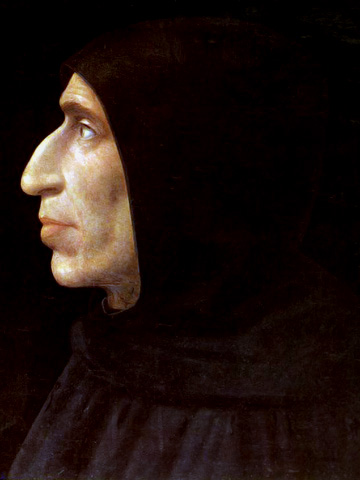
Girolamo Savonarola


Again, more concretely. Mill can try to prevent the prince from appointing a Savonarola on the grounds that a Savonarola by overprosectuing punishes the faithful as well as the faithless and thereby erases the distinction between faith and faithlessness. Mill can say that discovering the truth of faithfulness requires a certain amount "tolerance". This is a reasonable argument. Mill's argument fits in nicely with Lewis's pragmatic reason for the concept of Truth to be instantiated - individuals in a society desire to have meaningful signs.

In short, Mill may have been many things, but he was not a milquetoast.

Monday, June 19, 2017

Why Should We Believe In The Truth

David Hume

There are two main rivers in modern thought. One is the English Philosophy based on a misreading of Hume. The English Philosophy emphasizes epistemology. What's the point of having weird objects if we can't learn anything about them? The other is the European Philosophy, and is - coincidentally - based on a separate misreading of Hume. It emphasizes ontology, the question of what kinds of objects exist. Epistemology is easy - if reliable witnesses exist the whole problem is solved.

Richard Rorty

Two sub flows within these rivers are called "ordinary language philosophy" and "pragmatism".

Pragmatism is primarily concerned with the reduction of the big concepts like Truth and Justice to simpler practical and evolutionary concepts. It began, like all philosophy, with the Socratic attempt to show that a truly good man will - by divine coincidence - be satisfied, if not happy.

Richard Rorty was one of pragmatism's ablest modern adherents. Rorty holds (with men like Peirce, James and Dewey) that, to quote Peirce, "The truth is a kind of efficiency.". Rorty gathered and sharpened weapons from all over philosophy and even science to defend his vision. He is almost infamous for using humor and sarcasm (saints be) to denigrate the "bad, old philosophy" that holds that there is something like Truth or even a first person point of view.

G K Chesterton

Pragmatist philosophy is reformist and scolding. You betta get rid of dis Truth jazz or you'll tie yaself in stupid knots. Contrariwise, the philosophy of ordinary language is conservative. The philosopher of ordinary language operates on the theory that languages and linguistic communities are highly evolved things and a lone philosopher far more likely to be muddleheaded than an entire linguistic community. Such a philosopher says, with Chesterton, "Dick, my friend, it will do you no good to tell me you don't what good Truth is. Only when you can tell me you do understand, will I let you fiddle around.".

To such a person, that Rorty, Peirce, James & Dewey's theories are wrong is as plain as South Dakota. The fact is, when ordinary people use the word "true". Let me give an example.


You can hear it, right? Darth Vader clearly says "Search your heart. You know it to be true!". He is referring to an event that happened in the past, not in the future. Certainly not future efficiency. All the pragmatist theories of the truth just don't correspond to a theory of how the word truth is used. All of Rorty's irony and sarcasm can't overcome the fact that this is the concept used and no other. He may as well mock those bad, old philosophers who have only two eyes.

Rorty the reformer comes in and says "Very well, sure he thinks he used that concept. But he really shouldn't. He certainly shouldn't say 'Search your heart.'. Vader should say 'If you think I killed your father, your fascination with the Dark Side will become mysterious and difficult.'. The important thing is not that Vader fathered Luke in the past, but what that means for the future.".

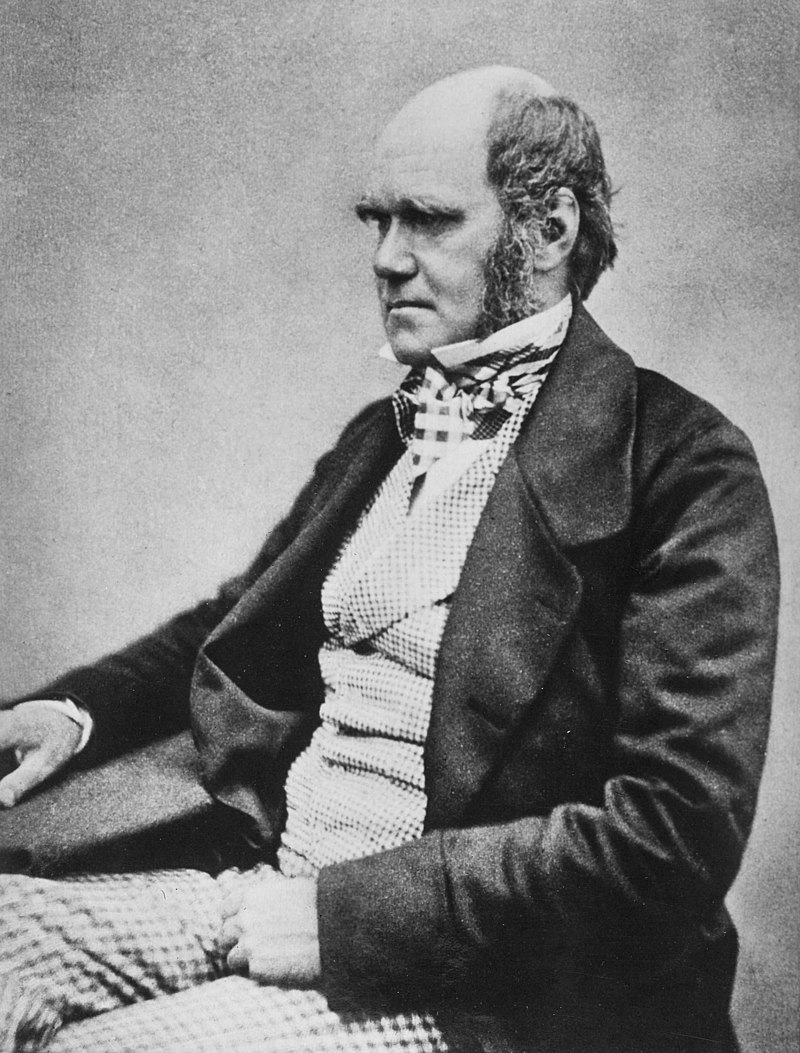
Charles Darwin

This is wrong. The concept of backwards looking capital T Truth did not evolve in this way or for this reason. Languages evolve in many ways. We know, for instance, that high dimensional signals are more stable in come signalling games than simple ones. In other words, mathematics teaches us that the birds sing beautifully. That sure is kind of it.

Math teaches us more than this. We know from the detailed analysis of signalling games by people like John Maynard Smith, David Lewis and Brian Skyrms when communities evolve meaningful signalling. Truth in language is a repeatedly evolved strategy for dealing with ambiguity. An ambiguous situation for a speaker & listener pair is one with many approximately equally likely outcomes. Communication becomes meaningful because the speaker can lead or mislead the listener.


Where Rorty is right is that the concept of Truth is instantiated in the world for pragmatic, evolutionary reasons. Forward looking ones. But he blunders by saying that it is thus for true sentences - blunders into ordinary, boring error. Backwards and outwards looking Truth exists and is useful - maybe even occasionally used in situations not so important.


Why does Rorty make this mistake? One is that if he were to admit Truth he would have to admit ethics. If backwards looking Truth is so dang useful, Truth ought to be made into a habit - this is the essence of pragmatism, the reduction of things to practicality. If Truth exists, then philosophy is not just a kind of writing, but an instructive kind of writing. Philosophy should encourage us to be reliable witnesses (not necessarily perfectly reliable). Heck, one might even say that if reliable witnesses exist, then the whole problem would be solved...

This would go against Rorty's biggest conviction. Rorty was a "structuralist". His view of society was that it was like a giant building, maybe a library. Sure, sometimes a book got out of place. Maybe there are mice or cockroaches to be exterminated. But overall, society as an organic whole is organized and everything has its place. He often talked of people being "programmed by their linguistic community" to use certain sentences. This is implicit social science ... the worst kind of social science.

In reality, communities are dynamic, evolving and structurally indeterminate. Further, even if a structure is in place, that doesn't mean that it implies anything on the individual level. A particle of water wanders randomly, perhaps quickly perhaps slowly, through a stationary cloud of fog...

Nannerl, Wolfgang, Anna Maria and Leopold Mozart

The so-called 'classical' style of music was meant to emulate the perceived simplicity and grace of ancient - or 'classical' - art (that it bore no resemblance to the music of those time was just a bonus). The best practitioners, such as CPE Bach, Joseph Haydn or Wolfgang Mozart, used stereotyped finger movements and chordal patterns to build large musical pieces quickly and have them played clearly. But it does not follow that a moderate amount of knowledge of this musical language makes Mozart's music predictable. Musical language is not a simple Markov process. Musical language sits on the top of Chomsky's linguistic hierarchy. Pretending that Mozart was just pushed by this social structure or that linguistic community is pseudo-scientific if it doesn't give us good hypothesis about Mozart's music.

Once we move beyond a structural equilibrium analysis, we can see that truth in signalling games is both common and observed. Individual and their problems come back into sight. Only then is the Truth plain.

Wednesday, June 7, 2017

Prolegomenon To Any Future Endogenous Growth: A Review Of Robert Solow's Siena Lectures

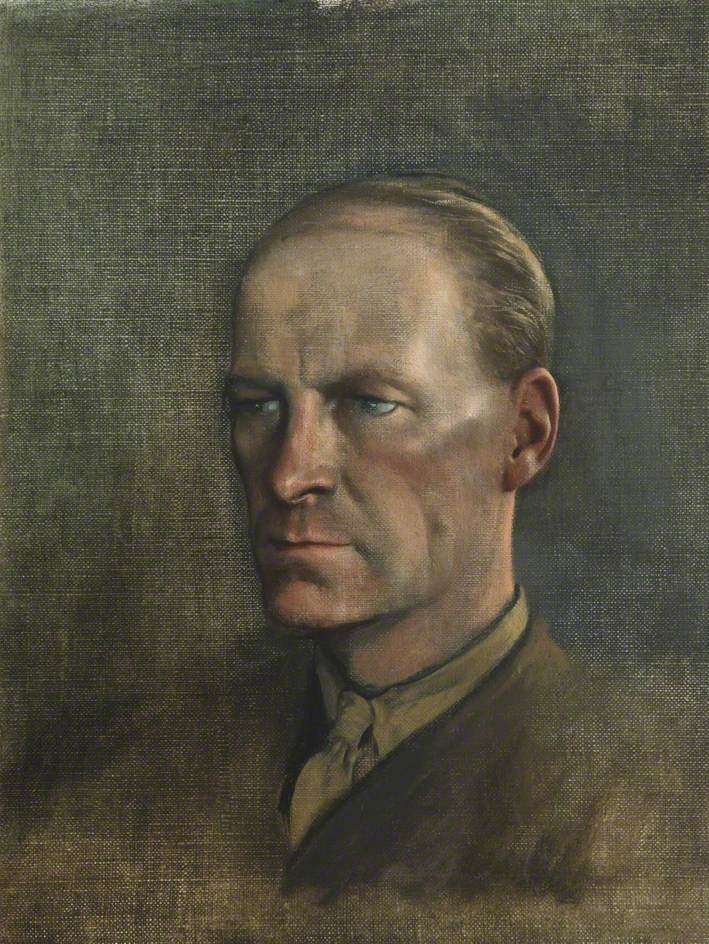
Robert Solow

This book is set of six lectures on the Theory Of Endogenous Growth given by Robert Solow at the University Of Siena in Tuscany, Italy in 1992. These lectures are extremely excellent: clear, perceptive and brilliant. Anyone who reads them will have a better idea what is right and (more importantly) what is wrong with this area of economics. Solow has a brilliant technical command of his subject, a philosophical wisdom about his profession and - it must be said - a brilliant way with words. I would strongly recommend this book to anyone, even if the only relationship with neoclassical economics they desire is spitting on its grave. The only caveat is that the lectures make fairly steep assumptions about the reader's ability to read math.

So, what is the Theory Of Endogenous Growth? To answer this, let's start with a simpler question - "What is Growth Theory?". To answer this, we will (somewhat artificially) divide all the thoughts and models of the broad economy into two parts: sickness and health. The theory of depressions & recessions, of inflations and deflations, of coordination failures throughout supply chains, etc. etc. etc. are the theories of sickness. One can study the sources of sickness - monetary & fiscal policy mistakes, movements of aggregate demand, unpredictable policies, sheer complexity of the economic system, unforeseeable economic shocks, etc..

Roy Harrod


This list of problems seem formidable obstacles to any economy, like mountains of disease. Back in the late 30's and yearly 40's, economist Roy Harrod formalized these ideas and found two major sources of illness in a (closed, growing) economy. These sources are: 1) the difference between expected investment and actual savings and 2) the difference between "natural" and actual growth rates. In 1956, Solow demonstrated that these two sources were actually one - if expected investment were always equal to actual savings (by some miracle), then the actual growth rate would also be the natural growth rate. By abstracting away from money and the business cycle, Solow was able to collapse all of the old theory into a few simple equations - simple enough to be checked against the data. The only problem is, of course, the assumptions of the theory are quite wrong...

Following Solow's ideas like greyhounds after a lure, the neoclassical theorists of growth - which is now Growth Theory tout court - abstracts from the business cycle and treats so-called "long run growth" (spooky scary scare-quotes roam across the land...). As a stylized fact, this growth is exponential, which simplifies analysis. All we really care about is the relations between various rates.


There are two unpleasant things about Solow's model.

One I've already outlined - it doesn't even talk about recessions, depressions and other moments of ill health. Why make the heroic assumption that all is right in the Keynesio-Monetarist side of the economy? Perhaps it Solow's natural Roosevelt-Truman WWII American optimism against Harrod's decline of the British Empire pessimism. Perhaps it was because Solow was just entering his 30s and Harrod was leaving his 30s. Whatever the cause, we will leave this alone.

The second is that the theory describes relations between the rates but doesn't give any reason that the rates should be one number and not another. No matter what stripe of economist you are, the natural growth rate of the economy should be given by something in the economy, not just postulated and "measured" (I hope you find these scare-quotes frightening!). When a parameter is given as part of the structure of a model it is called 'exogenous'. If a parameter is a exogenous to a model, then that model says nothing of interest about that parameter. Yet the growth rate matters to the central banker or politician as well - in the unemployment rate goes up or down how do we know it's because of a deep, permanent shift in the economy as opposed to a shallow slide that needs to be corrected so that it doesn't become an avalanche?

This second problem, of taking growth rate as a prediction instead of a predictor, would satisfy more souls. When a parameter is derived from it is called 'endogenous'. Therefore, this is the problem of 'Endogenous Growth'.


Trevor Swan

The Siena lectures begin with a lecture on merely Exogenous Growth Theory. The first chapter is a sort of refresher course with some subtle points that Solow will use in the other lectures. Solow exposits the now traditional Neoclassical Growth Theory from two perspectives: a "maximizing" perspective which emphasizes its Neoclassical & Theoretical aspects and a "behavioristic" perspective which emphasizes its Keynesian & Positive aspects

 In my earlier post, I talked about a textbook which emphasized the "behavioristic" Keynesian & Positive approach. The "behavioristic" approach has the disadvantage that some of the steps are purposefully arbitrary. It cannot really be extended, since every possible function is (in theory) allowed. Supposedly, we just filch a consumption function and check against the data. In reality, we take the consumption function from the other approach.

This arbitrariness is reduced very slightly in the "maximizing" Neoclassical & Theoretical approach. In this approach, the consumption function is derived by a bit of calculus from a utility function (a function which tells how satisfied the household is with a particular path of consumption over time) - which is itself arbitrary. Solow has some fun teasing the utility function ("a peasant household ... which goes on forever, with consistent preferences"). The only purely scientific advantage of the "maximizing" approach is that it suggests (to some) ways to extend to new theoretical vistae. Solow is forced to include the "maximizing" approach because such a vista is the goal of "Endogenous Growth Theory".

Solow concludes his exposition of Neoclassical Growth Theory with a brief summary. Consumption per head grows at exactly the rate of labor augmenting technological progress (given by the gods and the kings). The stock of capital grows at the rate of labor augmenting technological progress  plus the rate of population growth (given by the same folk). Output grows at the same rate.

Robert Lucas

Solow begins the development of Endogenous Growth Theory with a bit of a trick. He does not show Lucas's 1988 Endogenous Growth Theory model. Instead, he modifies the utility function (which, remember, is arbitrary) of that model slightly (perhaps Lucas would prefer "slightly" in scare-quotes). In Lucas's model, every moment not spent working is spent learning. That rate of learning feeds forward into the growth rate. The growth rate is now endogenous, determined by this learning rate. In this new Solow-Lucas model, consumers can enjoy leisure.

The result is illustratively disastrous. No matter how small the enjoyment rate of leisure is, the consumer will always take enough leisure to cancel out any endogenity of the growth. The model is not continuous in the parameter that gives the rate at which one enjoys leisure. At zero exactly, there is endogenous growth, away from zero - no matter how slightly - only exogenous growth is seen.

Solow demonstrates this very carefully and with great insight. But this result would not be shocking to anyone with mathematical ability. There is no reason to assume these extrema are continuous in every parameter. It doesn't take much thought to notice that fastest route between two points is teleportation. But it does spell grave difficulties for any supposed theory of endogenous growth. Without continuity one cannot have approximability. Even drunken man can approximate a straight line home but what does it even mean to approximate teleportation home? Nothing. This is destructive to the positive point of view. If you believe in the Lucas's 1988 Endogenous Growth Theory model, it no longer makes any sense whatsoever to think of the assumptions as maybe right-ish and test them out, one must be correct in a very divine way about the Solow Leisure Parameter being zero.

Paul Romer


In the third through fifth lecture, Solow examines and dissects various other endogenous growth models. This includes a Paul Romer model in which increasing varieties of capital goods determine growth, a Grossman-Helpman model where increasing knowledge allows one to make more and a greater variety of goods and an Aghion-Howitt model where innovations arrive randomly. All of these introduce further knife-edge assumptions to the stock neoclassical assumptions. Romer's paper is dependent on a particular institutional structure, Grossman-Helpma's paper demands a very particular function for the growth of knowledge on pain of producing infinite goods in finite time, the Aghion-Howitt model is contains many extremely arbitrary and unmeasurable elements - including the painful fact that endogenity is assumed rather than being a natural feature of the model.

Solow states and implies that these difficulties are representative of the endogenous growth theoretical literature. As far as I am aware, this is still true.

Robert Summers


In the sixth and final chapter, Solow looks over what was then the latest growth data. A cliche among investors states "Information is worth money, so macro data is free.". While not quite true, it isn't more misleading than a cliche should be. More over, since the endogenous growth models are related in very complex and non-continuous ways to exogenous growth models and each other, even with heroic assumptions the data do not distinguish among the models very well. It is my understanding that while the quantity and quality of data have improved significantly. However, this cannot fix the mathematical difficulties around discontinuity.


Robert Solow

This book has much to recommend it as an introduction and critique of the methods & minds within modern neoclassical growth theory. I feel that the real message of this book is that if we really want to understand growth, what we need is an empirically grounded micro-macro understanding of the actual process of innovation as it really occurs rather than piling arbitrary assumption on heroic assumption. Many - such as the philosopher Karl Popper - believe there is no scientific pattern to this across countries or over time. If so, a lot of high powered economists are chasing waterfalls...

Monday, June 5, 2017

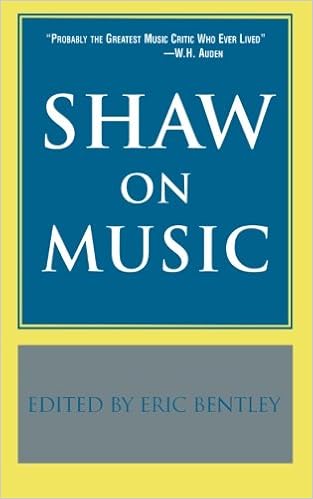
Mozart, Wagner And Trash: A Review Of Shaw On Music

 George Bernard Shaw in 1894, when he ended his regular music column

There are two sorts of persons: Platonists and Aristotleans. A Platonist is the sort that has an idea of how things ought to be, whether it is a piano recital or a state. As such, every movie, book, nation, planet and computer program could be perfect but imperfection in execution prevents it. The critic is always and everywhere a Platonist, while res publica are not a person. An Aristotlean is an impassive sort who prefers what he likes and avoids what he dislikes not on any scale but simply as the offers vary. Platonists dominate our discourse despite probably not dominating us numerically. The only chance that Aristotleanism is allowed to speak up is when someone wants to give a Platonist view of what a critic "ought to be" - they should be strict Aristoleans when they oppose me and powerful Platonists when they are with me.

This book, a collection of writings on music written by George Bernard Shaw - the mad genius of the Fabians - is full of the indignant Platonist howling that the loftiest love song of Mozart must vibrate through a stuffy prima donna's undeserving vocal chords. Such a collection is valuable for two reasons: First, because Shaw is equally comfortable analyzing, contextualizing and criticizing Mozart at his best as he is among the submucousal glands of the throat; Second, because Shaw is a great writer whose venom and sweetness would have value even if he used them like Pauline Kael (randomly and without accuracy).

Johannes Chrysostomus Wolfgangus Theophilus Mozart


Bernard Shaw claims multiple times in this book that he learned drama from music - from the evidence he gives this is likely true. But he worms music halfway to drama by having little patience for instrumental music. Shaw's interest is in singer/actors and his demands are rigorous: they must sing both Mozart and Wagner both perfectly and easily, they must show absolute selflessness by never requesting a bit of musical show off nor a bit of ham acting, they must always both mentally be in the scene artificed around them and of course they absolutely must have the same Platonic concept of the work as Shaw. Shaw, like most critics, can forgive any of the sins except the last.

I am of the opposite opinion, musically (and on a great deal besides). I think singing is somewhat annoying and doubt that any piece of singing longer than a few minutes could ever be worth hearing. Meanwhile, I could listen to hours of "absolute music" - as music without singing is so inaccurately called - without boredom. I have no interest in opera or music drama and positively dislike musicals.

When Shaw says "The music of the 18th century is all dance music", he speaks the truth as far as the sentence goes. But when he extends beyond this he finds that it must imply that all "absolute" music is without ideas. This is just misplaced concreteness. One might as well say that because books were originally written speeches they can contain no ideas. If we followed Shaw's rationalization to its end, the only piece of absolute music is Handel's "Water Music" - a bit of background music for some wealthy landlord. And maybe it is. If so, we need some new word for the work of Bach, Brahms or Duke Ellington.

Wilhelm Richard Wagner


Anyone for whom music is primarily a dramatic art form must believe that singing is the supreme art and composing lyrics for the voice the best possible poetry. Shaw, compelled by this logic, compares Shakespear (Shaw always spells the English Guillaume's name in this fashion) to Wagner to Shakespear's loss. When Juliet comes to stage to moon over Romeo she launches into a quite unrealistic mannered legalistic musing on the nature of names and naming. Shaw, who presumably has much experience in this area, tells us not what a young lady would do in this situation. Wagner, meanwhile, may have Isolde merely sing "Oh Tristan, Tristan, My Tristan, Tristan!" over and over again in pleasant metrical pattern. Much more realistic, says Shaw.

This is not a high standard for realism.


Shaw's dramatic music love is not just for drama but specifically German drama. For him, opera essentially begins with Gluck who taught the Italians not to bow to their prime donne and write appropriately dramatic music. The opera then reached its height with Mozart, for whom form and expression were as simple and affectationless as breath and defecation. Opera was then fortunately destroyed by Wagner, who - instead of worrying terribly about which chord followed what and smoothing out rhythms - simply played whatever music the poem called for at a moments notice. If this should be in D and that in E-Flat, so much the worse for D and E-flat.

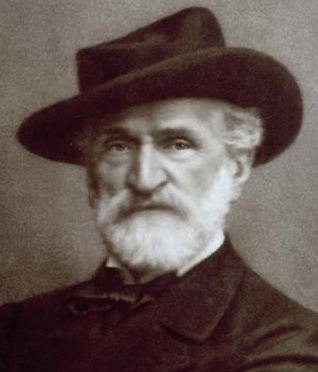
Giuseppe Fortunino Francesco Verdi

Shaw's dislike for Italy is so deep that he has difficulty praising Verdi (incapable of writing for the voice) even as he grudgingly admits Falstaff is a masterpiece. This essay is a masterpiece in the form of "the critic angered by greatness". Nothing sets up the ire of the Platonist as the brilliant and successful pursuit of someone else's goals.

To give another example, it is obvious that Shaw's immense dislike of Rossini is a dislike not of Rossini's methods (which he disparages extensively and accurately) but of Rossini's goals. Rossini is writing neither for himself, musicians nor for thinkers but for that hideous abstraction "the common man". Shaw detects that Rossini thinks even less of the common man than even Shaw himself - this is more certainly more true and more damning than any technical detail Shaw hauls out.

Shaw in 1879, when he published his first novel

Shaw is an inveterate author, which is rather different from being a writer. He doesn't just fill up column space. Shaw is always noticing something concrete when listening to abstract music and deriving abstract thought from the concrete scenes. Anyone who has read The Perfect Wagnerite has seen the second but it is the first which occupies most of this volume. A trip to Bayreuth in 1894 brings pages of invective against the shoddy craftsmanship of German instruments and attacks on the competence of German singers (though he praises their instructors - the first essay makes clear why this seeming contradiction holds). As a result, Shaw is often most interesting when he leaves behind his subject. For instance, during an essay on Beethoven, he gives the best and only definition of jazz - "the old dance band, Beethoveniszed". This is no defect.

Shaw was - as a matter of course -  completely mad. But he was also brilliant. This pose isn't a general review of his thought and writing. If I could take the time, I would recommend The Perfect Wagnerite, his brief but excellent Fabian Essays on economics, the 1938 movie Pygmalion and a bit of forgiveness for an old Irishman who wrote far too much & lived far too long.


Shaw On Music itself, meanwhile, is an excellent book for anyone with an interest in music, drama or the arts in general. In these cranky old essays I can detect the enthusiasm of the fan and lover despite the Platonistic personality burning through. Anyone who can read criticism for pleasure will enjoy this book, even if (like me) they have no interest in music-drama. People with an interest in "pop culture" reviews will also gain by this book, I think, because of its de-mystifying approach to works that are now considered classics. If you imagine a book of essays by the average music blogger who was also a Nobel Prize Winner in Literature, then you have a good estimate of what this book is like.

Tuesday, April 25, 2017

I Am The Very Model Of A Modern Macro Textbook

Alexander Douglas, a professor of philosophy at the University of St. Andrews, recently posed a group of interesting questions on Medium. The first question is the more interesting one. Douglas tortures a pair of equations from a fairly modern macro textbook, but finds they will not confess. That equation pair is

\[ b_t =  \frac{b_{t+N}}{(1+r)^N}+ \sum_{i=1}^{N} \frac{s_{t+i}}{(1+r)^i}\]
\[ b_t =  \sum_{i=1}^{\infty} \frac{s_{t+i}}{(1+r)^i}\]

where \( b_t \) is the value of outlaying government bonds, \( r \) is the real interest rate (assumed given & constant) and \( s_t \) is the primary surplus. These equations say*, respectively:

The current value of outlaying government bonds (of a finitely lived government) is exactly the present value of the lump of remaining government bonds at the end of its life plus the present value of government surplus over that time.

The current value of outlaying government bonds is exactly the present value of its surplus over time.

The book treats these as more or less accounting terms, though since they involve value they aren't really accounting. Douglas asks how the second equation relates to the first. I give my answer in the paragraph with the underlined sentence. What seems to have given Douglas fits is the following sentence:

"The governments solvency ... condition can therefore be seen to be ... that ... debt must be backed at all times be backed by primary surpluses with a present value equal to the debt's face value."


This sentence in it's full version refers to a "transversality condition", a name that comes from optimization models but is a meaningless meme in the textbook's approach.

Economist Nick Rowe gave a very nice response - his point of view was that too answer Douglas's question the best thing to do is to throw out the book situation and give an example tailored to Douglas's question. Brian Romanchuck have another nice response, it seems to be his idea also to throw out the book's description but with more force.

My own initial response was displeasure that Douglas (and Romanchuck) seem to criticize the very idea of infinite mathematical objects. In these modern days of lazy evaluation, even constructive finitists shouldn't do that! But Douglas and Romanchuck have had time to lay out their objections in more detail and I don't think pure math is the relevant issue.

I think the relevant issue is economics.

There is an implicit causality to the story in the textbook that doesn't come through in the equations. The causality - in both equations - is from left to right. The sequence \( s_t \) is the cause and the sequence \( b_t \) is the effect. The desired story is "Governments can only increase debt by promising surplus in the future.". The story of how \( s_t \) evolves is the model, if it fits the equations then we accept it - otherwise reject it.

There's an implicit institutional structure there, that \( r \) is determined by an independent and fierce central bank. In the US and Europe, of course, \( r_t \)  is actually determined by cybernetic feedback process by a politically constrained central bank (the constraints seem weaker in Europe for some reason).

On the bottom of page 185, the story suddenly stops being about \( r \), \( s_t \) and \( b_t \) and suddenly starts being about \( r - g \). Implicitly \( g \) is an independent variable set by technological process, as in the Solow models**. This is a strong, but common assumption. In reality, even "just" technological growth is a complex process that involves discovery, distributional concerns, government backing of science and lots and lots of complex non-linear feedback.

The textbook implicitly assumes we're looking at a 'long run' in which both these feedback processes have settled down.

In the finite story, \( N \) is outside the model - the government implodes on a predetermined date. The implicit institutional structure sets \( r > g \) so that \( b_{t+N} \)  will have a positive value - but its present value is proportional to \( r - g \). The implicit Central Bank chooses that variable. If \(N = \infty \), the implicit Central Bank is constrained to choose \( r \) such that the second equation comes out of the first. This is the answer to Douglas's question.

Romanchuck has a further objection - there's no optimization in this model (it's not just macro, it's very macro). That doesn't matter to this textbook - it doesn't care because \( s_t \) and \( b_t \) are assumed to be measurable. If you have a microfounded theory that gives the wrong values (such as infinity), who cares, that just means that either the theory is wrong - or that the implicit theories of the equations are wrong. Both are valid answers.

Is this good economics? Well, it's definitely standard economics. The ideas were invented by Irving Fisher and reinvented many times after him. This model isn't perfectly general. There's an implicit institutional structure patterned on the US and Europe. Maybe in the previous six chapters, the textbook went over all these implicit assumptions. In the immortal words of Dom Mazzetti "Doubt it".

One helpful question is "What would it mean for it to be wrong?". Well, for one, bonds can be worth more than the present value of government surplus. This is probably true but due to risk and uncertainty, which are left out of this model.

This is all that I can get out of these poor equations. But I'll end on one slightly more "philosophical" (maybe I should be careful with that word around a philosophy professor!) observation:

In macroeconomics, there is no data, only models.

*There's no uncertainty or randomness in these equations, so I'm not gonna keep saying "under rational expectations", "assuming expected value exists", "certainty equivalent", "common knowledge", blah blah blah. That's all under the rug.

** Fish don't see the water they swim in. To many economists, Solow is just accounting. C'est la vie.

Tuesday, April 11, 2017

Accounting For Cultural Appropriation


In today's web-media-nerd environment, a lot of people complain about "cultural appropriation" without explaining what it is or why it's bad. If you know, good job! You don't have to read this!

But, still, even if you know what "cultural appropriation" means, the concept can be hard to explain. I know what "Lebesgue measure of a set of real numbers" means, but that doesn't mean I can explain it quickly. Some people don't think "cultural appropriation" exists at all! I think they're wrong. I think there is a useful concept around this phrase.

Gilbert Ryle


What is so complicated about explaining "cultural appropriation"? It just means taking from another culture, right? No, I don't think that's right. You might say that you can define anything you want how you want it - if you say "cultural appropriation" means "sausage" then it does. I disagree, at least in this context. The smarter thing in this case to do is to see how people actually use, get offended etc, not self-importantly prescribe some arbitrary definition and chase its implications. Ryle-Wittgenstein-Anscombe ordinary language is more useful than Hilbert-Frege arbitrariness of sign.

Counterexamples to the "taking [anything?] from another culture" definition about in ordinary usage. Samurai Jack is an American cartoon about a Japanese man, is it culturally appropriative? I don't see people complaining! Wikipedia says that K-Pop incorporates "Western pop music, rock, jazz, hip-hop, R&B, reggae, electronica, techno, rave, nu metal, folk, country and classical on top of its traditional Korean music roots.". Is that culturally appropriative? Again, I don't see people complaining...


 Ernest Gellner

The simplistic, but wrong definition makes it sound like we have to define "culture" first, then "appropriation". Both of these are hard to do (if possible at all), boring and have nothing to do with the task at hand!

This definition seems to assume that a "culture" is a well-defined and monolithic object, which is just untrue. Cultures are created by politically motivated elites suffering from false consciousness (which doesn't make them bad! All of the greatest works of art of all time were made within cultures!). Gellner, to take one arbitrary name out of an entire discipline, extensively documented this process in Nations And Nationalism.

This is true even for supposedly "insular" cultures. "Bushido" - a supposed traditional warrior ethic - was created by Japanese Confucian scholars in peace time. Jamaicans have been toasting over drum heavy tracks since the 50's - but New Yorkers duel over who "created" hip hop.

Well, I think of New York as an insular culture anyway. They sure talk about themselves a lot!

Similarly "appropriation" must be well-defined and monolithic for the simplistic definition to work, which is - again - just untrue. Appropriation, in this sense, means stealing (basically). Stealing what? Ideas? This is impossible to define clearly. Fela Kuti & Toots Hibbert were inspired by soul music. Did they "steal" from American culture? Of course not, that's stupid. But then what does theft even mean in this context?

 Daniel Dennett

The name "cultural appropriation" is an uninformative meme. We don't get the best names every time. Do you know what Von Neumann-Bernays-Godel Set Theory is? "Set Theory With Large Classes" would be a better name. We don't get that name.

Cultures don't have to be monolithic for "cultural appropriation" to exist. Cultures don't have to exist for "cultural appropriation" to exist. Justice doesn't have to be monolithic for "cultural appropriation" to exist. Justice doesn't have to exist for "cultural appropriation" to exist.

Herbert Simon, apparently???

Cultural appropriation is about ... *extremely economist voice* incentives. Please, stop booing and throwing Molotov Cocktails, I'm going somewhere with this!
 
"Little" Richard Penniman

After that lengthy kung fu battle, let's go back to the original example of cultural appropriation - the bedrock case upon which all others are conceived. The complex career of the above pictured Richard Penniman was fraught with bad incentives which lead to an enormous undervaluing of his considerable musical genius. He started out in the gospel scene, where it was impossible to make money. He moved on to the gay nightclub scene (!!!) which was both dangerous and impossible to make money. Finally he moved on to the R&B scene, where it was conceivable that he could make some scratch, at least in the abstract.

These may have been "bad incentives", but they weren't "cultural appropriation". That didn't start until the center of the 50's.


In 1955, Penniman's composition "Tutti Frutti" went to number 17 on the charts - a top 20 hit! The record company pressured Pat Boone to record a cover, which he eventually did. Boone hated the song and made no effort to hide it. This version went to number 12, despite being just the worst.

There's no reason that Boone and the record company should have gotten so rich off this performance. Not only Boone's singing generally awful, he's not even pretending to try. The arrangement is bland. Boone didn't get what the song was about but wouldn't have even sung it if he did.

This is a misaligned incentive. Boone is being rewarded for his astonishing ability to not be Little Richard. To not be black, gay or flamboyant. That he sucked on ice was not a detriment, maybe even helpful.

This is what "cultural appropriation" is - making it hard for innovators to capitalize on their innovations because of, essentially, politics. Like all discrimination, cultural appropriation is a form of so-called "market failure" (because such markets fail certain models, not because people fail on those markets! It's a weird name). It presumes that certain actors have a form of power - which may not be "market power" strictly but is strategically related.

Wocka Wocka Wocka


If we pretend justice exists for a bit, cultural appropriation is unjust - it robs innovators of their due. If we pretend morals exist for a bit, cultural appropriation is bad - it reduces the incentive to innovate (which is very important). If we pretend that airplanes in the sky are like shooting stars then they'll burn up in our minds or something.

Fela Kuti


This explains why Fela Kuti isn't cultural appropriation - his sales don't detract from Motown's sales. He took ideas, but didn't realign incentives. If he had somehow realigned incentives, it might have been unfair and unjust cultural appropriation. There's nothing logically impossible about this, even though it didn't occur and there are reasons it didn't.

Thinking about Fela Kuti further shows why the simplistic definition isn't just incoherent and contrary to use, it's actively pernicious. Not only does it create an outrage culture where using innovative ideas is bad, but also completely fails to point toward the underlying economic and political problems. Anger and impotence are unwelcome bedfellows.

Rupert Sanders


Here's a 10 cent question - is the new Ghost In The Shell cultural appropriation (by this definition)? I don't think so. Something tells me that the innovators - Shirow Masamune, Oshii, etc - are gonna be just fine. This movie is not gonna reduce their sales etc. Oshii in particular is an innovative filmmaker and I hope he is able continue without incident. The new Ghost In The Shell did get caught up in Hollywood's representation problems, which is a seperate issue.

Also, the new Ghost In The Shell is really bad.