Thursday, January 14, 2016

Back In The Republic Of Poland


Anyway, now that I've offended my Polish neighbors (yes, i am aware that Poland has been independent for decades now), it's a good time to start blogging again. It wasn't obvious from the way that I wrote, but I did a lot of research for the last posts. I think I need to blog a little more lightly for a bit to get back into a rhythm. I was on a roll for a while.

Navel Gazing

Personally, I'm annoyed right now. I can't get into contact my landlord, who has my mail. Even when I reach her, it's still going to be hard to convey I want my mail - I don't speak Polish. I don't have a lot of free time, but I also don't have a lot of distractions. I'm not playing tomcat anymore and I don't have a TV. So I have more time than I would have had back home. Also, I'm having a hard time nailing down a sleep schedule in the Warsaw winter. I really enjoy the winter though. I like the snow and the cold. It's invigorating!

Steven Universe

A friend who knows that I like animation recommended that I try the animated shows Steven Universe and Gravity Falls. I chose SU because it looks a little bit more like Space Dandy. I've watched the pilot and the first two episodes now. They were all good! Sometimes it seemed like they drew "wacky faces" because they weren't confident in what emotion to convey. Also, every episode has a difficult balancing act of having a coherent plot, reveal new things about the 'verse (as hep cats say ... we still say that right?), hit the right emotional notes, look cool and be a comedy all in 11 minutes. Sure, Space Dandy can pull off a balancing act like that, but it 22 minutes and was directed by Shinchiro Watanabe. Still, the show seems fun. I will probably be blogging my reactions to future episodes as a way to get back to producing content. People can point and laugh for my ignorance at the show, also they can mock me for being an adult watching a kids show. This content is going to be daily, so that I get used to coming this blog. Expect the first entry Saturday or even tomorrow (depending on how a planned meeting with a friend goes - if it goes well, Saturday).

This was drawn by the character designer. Watanabe gave him the instruction "Draw it as if it was one of those foreign movie posters made by someone who has clearly never seen the movie.".

Furthermore, I'm going to be rewatching my favorite show, Cowboy Bebop. These reviews will be more in depth, scouring all the English language resources I can to give a total picture of this great work of art. Character designer Toshihiro Kawamoto's Bebop art book is translated and has a lot of behind the scenes information, like the factoid posted above. Plus, The AV Club's retrospective stinks on ice. No schedule for this series.
 

If I finish that, maybe I could do Ren & Stimpy, the great proto-punk cartoon. John K is an inspiration for me, he's why I took up drawing as a hobby. I even bought the Preston Blair book, which I love by the way. But we have to look at the real show with all of its flaws, not the Platonically perfect one that exists in his soul (otherwise Glen Or Glenda? would be the greatest movie of all time).

"But, what about IIATSTIEPW, CT?" 

Thanks for asking. I'm gonna try and promote that to a weekly series starting next Saturday. I work this weekend (yay), but if I plan a little and do the research (which is really just checking to see if I have the math I don't write correct) before I write instead of writing it in a huge marathon, it'll be less taxing. Yes, real physicists, I know what I was writing was trivial. But I needed to be sure it was correct in every detail - especially the ones I elided. It's a quirk (and why I can't work as an economist :P).

I have many other detailed ideas for posts. A critique of Ronald Coase (brilliant, but devious) and a comparison of a paper by Armen Alchian and one of Paul Krugman on evolutionary economics are two. The critique I have of Coase is really obvious, but I've never seen anybody make it, which  makes me wonder how many people are actually reading these papers. Am I the weirdo? Maybe it is because Coase is so obviously right on some things and so completely blind on others. Anyway, big carefully thought out posts are always and everywhere on no schedule, got me? Always and everywhere.

Future plans: I'll be in Portugal this summer for the COST Action Flowing Matter conference! I'm going to try to take a train, I've never done that! How exciti-... wait, that's the zloty/euro exchange rate? Oh travel, you never fail to be overcomplicated.

I have no plans to write better so feel free to continue to not read.

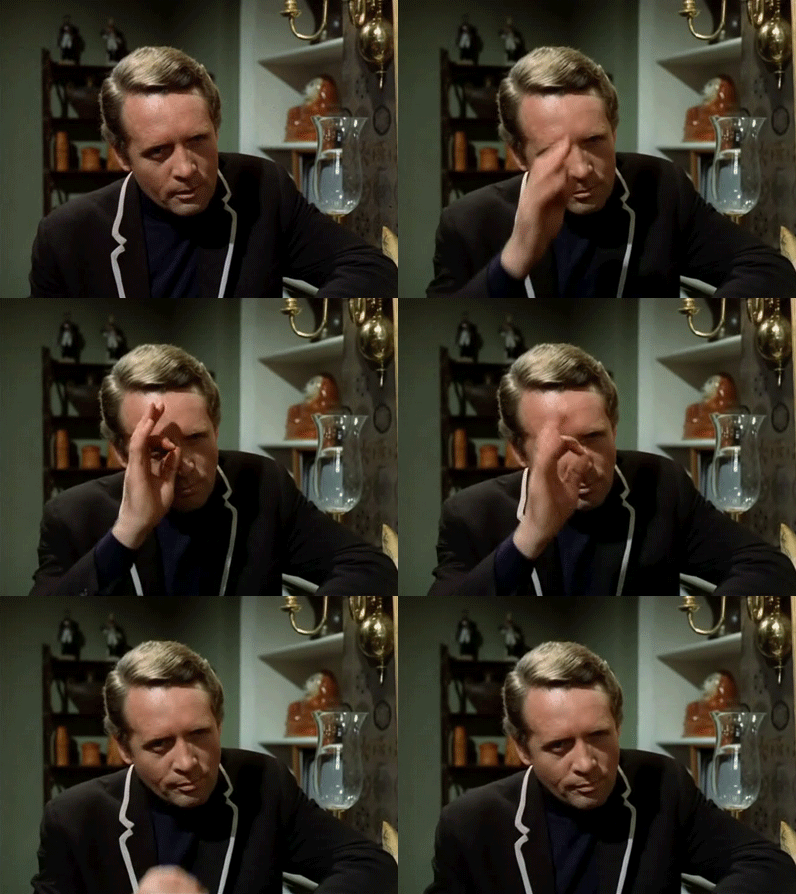
Be Seeing You!

Friday, November 20, 2015

Idealism and Modern Science

 "...[T]he Universe begins to look more like a great thought than like a great machine"
- James Jeans, The Mysterious Universe

I don't think it is unfair to say that most physicists are in some sense physicalists, that they believe that all that exists are physical objects. It would be foolish to say that they are dogmatic in this kind of materialism, a physicist would admit that there are fluids and gases in addition to atoms, fields and void - not to mention chairs, computers, brains and maybe even minds and social forces. Even if they say they do not believe in social forces, they would still act as if they exist. James Jeans - one of the cofounders of physical cosmology and major figure in early quantum mechanics - is an exception, possibly the only major physicist to endorse subjective idealism. I'd like to think "What is the best argument one could make for idealism using modern science as a guide?". This is just my first pass, and it will be a little thick with the philosophy - since I understand it less than the physics I feel the need to explain it more.

Immanuel Kant


First, a bit of background. Idealism was created by the German philosopher Immanuel Kant. His goal was to make the world safe for objective science in the light of what he understood to be David Hume's subjective attack. It was later amended and extended by Schopenhauer and others.

An example will make this attack clear. Imagine you see a baseball flying through the air. A moment later, the same baseball is soaring in the opposite direction. I ask you how this happened. You point out that there is a baseball game going on and the batter most likely hit it. How do you know  that? The answer is simple, but pregnant with complexity. You learned that baseball bats cause baseballs to change their course. More generally, Hume observed, you have never seen anything cause anything else, but have only learned to think of it that way. The answer for of how the baseball knew what course to take is more difficult, and I'll return to it later. Another example: in modern psychology we have learned why honey is sweet - it is sweet because we like it. The way that we project our liking of honey onto the world is denoted in the English Language as "sweet". These two behaviors, projecting an inner feeling onto the world, are found throughout human nature.

David Hume

This creates a trap. If so many of our notions are subjective, then how can we examine the world in an objective way? In his most complete work, Treatise On Human Nature, Hume escaped this trap by appealing to the notion of equilibrium. We may start out by false beliefs, but they cannot be stable against sufficient reflection, experiment and experience. This is a cheerful way of viewing the world. It is also erupting with implications and uses. Hume and his informal student Adam Smith used the concepts to develop psychology and economics. Unfortunately, Kant never saw this book or its solution. He only read Hume's An Enquiry Concerning Human Understanding, which contained the criticism but not the escape hatch. Kant was troubled, conflicted. He held the incredible success of the new Newtonian Physics in the one hand and a devastating criticism of the concept of objective science in the other.

Kant's solution is very complex. He had many disadvantages that we do not. In his time: Formal logic was in a pathetic state, psychology and anthropology simply did not exist, field theory did not exist in any form, the concept of biological evolution was a century off and even the classical mechanics and mathematics the informed him was frequently informal and its implications often deeply unclear. In view of this, Kant's achievements are very great. Today, we can afford to coast over what was very difficult for him.

The Dang-An-Sich

We start with a division between the particles, strings, fields and void that make up the world. This is the world as it exists without organization. Kant called the particles, strings, fields and void that make up an object the "Dang-An-Sich" (the "thing in itself"), but this is incomplete. As Schopenhauer pointed out, the distinctions between interacting objects are not in themselves "real" in the sense Kant wants (Why? Schopenhauer would say correctly, "Because energy is only conserved for the whole system.". Schopenhauer's exposition in general benefits from the enormous progress in the understanding of classical mechanics between their lifetimes). The universe as a whole must make up one ball of particles/strings/fields/voids. Schopenhauer called the big ball the Great Will. I will call it The Dang-An-Sich, the definite article. Very little of what we think of exists at this micro-macro-mega-meso-perspective. There are no tables, no chairs, no phases of matter, no minds, no social forces, no words, none of that. The Dang-An-Sich is an awesome object, but empty of content.

It is now possible to return to the question of how the baseball knew there was a game going on. Obviously. the baseball didn't, the system merely evolved in the way it did. From the point of view of the particles/strings/fields/voids in the field, the forces merely redistributed themselves according to fixed rules (the principle of least action, path-integral, etc.). The internal dynamics of The Dang-An-Sich are completely objective, but not terribly useful. The movements of a water molecule are from a purely local perspective, just what they are. They are ignorant of the fact the phase of the system as a whole.


It is only once we "choose" to think of The Dang-An-Sich as having temperature, pressure and other macro-properties that we get those properties back. This is called in physics "coarse graining". These higher level variables are the statistics of The Dang-An-Sich. The choice of statistical functions is not wholly arbitrary. Some objects are forced into it, the so-called necessary statistics. The best "choices" of partitions of The Dang-An-Sich into macro-states is done in such a way that knowledge of The Dang-An-Sich would not improve predictions of the evolution of the chosen macro-variables. They are termed "sufficient statistics". The basic thermodynamic functions take this form. You can read more here and here.

This new world has many new objects in it. These objects depend on our representations of The Dang-An-Sich. Not all representations are the same. One person may think in terms in temperature, another in inverse temperature. However, once a representation is chosen, the evolution of the chosen statistics is objective. We can do as we will, but we cannot will as we will. Still, this level of description is far richer than The Dang-An-Sich. We can now distinguish ice and water, a crystal from the air that surrounds it, and much more besides. However, this does not quite bring us to the world of experience. Schopenhauer might have called this world, "My Physical Representation" (if he were interested in it).

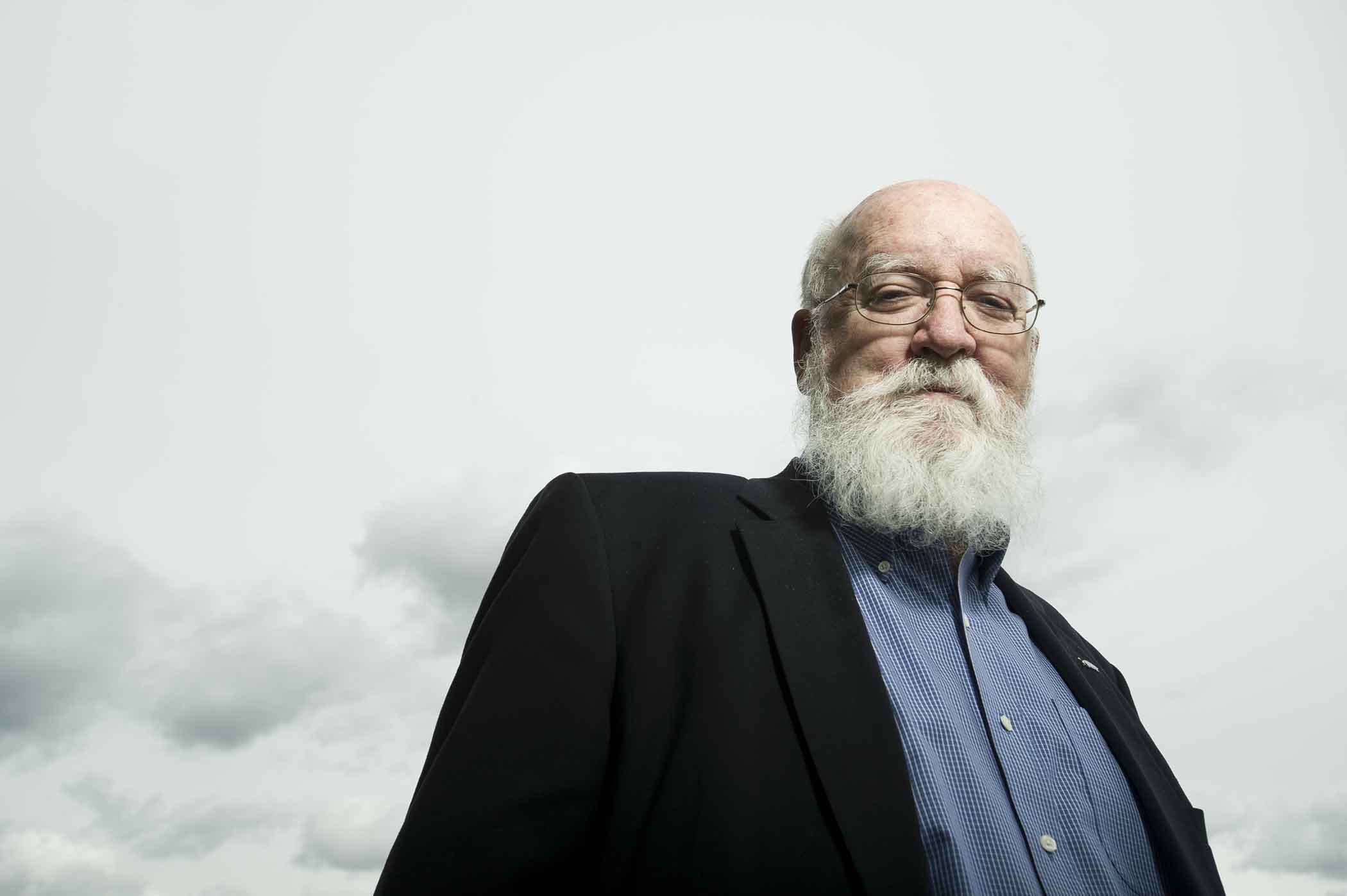
Daniel Dennett

There is still much distance to go until we get to idealism proper. Philosopher Daniel Dennett gives a sketch of how to extend the logic of partitioning The Dang-An-Sich into My Physical Representaion to include tables, chairs, minds, sweetness and social forces. He follows von Uexküll and James Gibson in developing this sketch into testable theories. Tables and chairs are defined in our minds not by their physical properties, but how they can be used. This new method of distinguishing objects are called the objects "affordances". This now expanded version of My Physical Representation was called by Schopenhauer "My Representation". My Representation is not objective given the evolution of The Dang-An-Sich. I can, by piling things on a chair often enough, come to think of it as a table. Schopenhauer was particularly interested in mystical practices, which he thought could give one conscious control over how one partitioned the world by affordances.

To recapitulate: in The Dang-An-Sich there were atoms/etc, but nothing that could be called a table. In My Physical Representation, there could be a solid with such and such mass and such and such composition. Now, in My Representation, there are finally tables which I recognize by the affordances it gives me. This is world is enormously more rich than the previous. As Jeans might have said better: "The Universe looks more like my thoughts than like a great, independent machine.".

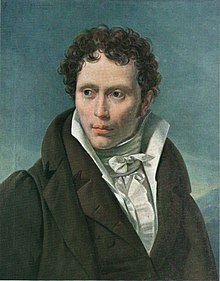
Arthur Schopenhauer

Schopenhauer's pessimism can be understood best in this context. In "The Sad World", as Brouwer put it, the only thing that cares about living things are other living things. Many people caricature and misunderstand Dawkins's The Selfish Gene as implying that individuals are selfish. Far from it! The point of the title is that genes, like all other non-living things, do not care about us. They, after all, gave us finite lifespans just to avoid competing with themselves. The sun doesn't care whether we freeze or burn. To The Ding-An-Sich, there is no I to burn, nor even any burning. Occasionally oxygen atoms are moved by the rules closer to some non-oxygen atoms, but even this may be too high a level of description for The Dang-An-Sich. To Schopenhauer, the indifference of all things implied that the highest spiritual act is to expand one's mind to consciousness of The Dan-An-Sich - which is to say into nothingness. To hedge his bet he allowed that there might be something beyond The Dang-An-Sich only accessible to mystics, but this is not supported by his general system. I do not agree with this nihilism. I think that the neutrality of The Dang-An-Sich heightens the importance, uniqueness and scarcity of kindness for humans and animals.

What about the counter arguments to idealism? Daniel Dennett is not an Idealist, but I don't think he would object to nothing in my presentation here. I think he would note that if this was what Idealists meant, then one could be an Idealist Physicalist. He would be right - by my lights you could be an Subjective Idealist/Objective Physicalist and which you call yourself depends more on mood than principle. I would say that The Dang-An-Sich and My Representation are just old ways of distinguishing the scientific and the manifest world-views. If he wanted to insist on not being an Idealist even then, he could then respond that the grammar of idealism isn't an optimal partition of the space of ideas, that it may even be an impediment to research. (And Jeans's distinction between machines and thoughts is unclear at best.) He may have a point, but it is much weaker than a genuine, hardcore physicalist would hope.

L E J Brouwer

This post was inspired by reading Life, Art And Mysticism by L E J Brouwer. It's a weird book.

Friday, October 23, 2015

Today in deliberate misreadings: Politics And The English Language

 George "The Animal Steele" Orwell

Everyone knows George Orwell wrote a great essay on political language. Hipsters (edit: I don't mean to attack this person specifically. The was inspired by someone I know personally) know that the essay is bunk, claiming stupidly that we should all write beige, colorless prose and always avoid the passive voice. The fact that I called them hipsters tells you where I stand. Yes, it is strange that Orwell should make us want to write as dully as ... The King James Bible. Gosh, it's almost like such a reading doesn't make sense when you think of it like that. Well, that's because it doesn't! One would think that linguists would understand the idea of qualifying phrases! Imagine if I wrote such trash about fluid mechanics:

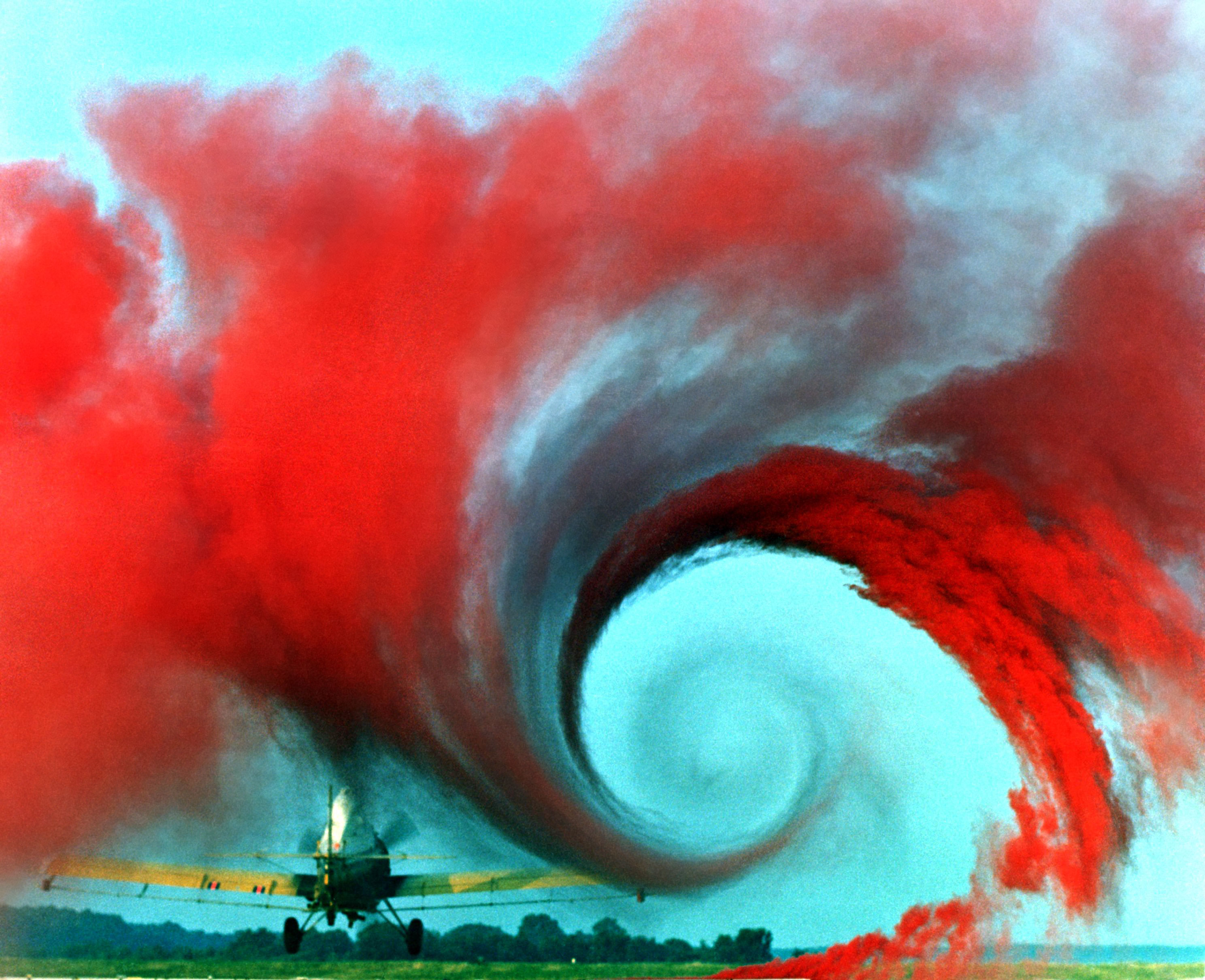
 I've always been fascinated by vortex dynamics

"How stupid is Helmholtz's essay on vortex dynamics? If he were right, wingtip vorticies couldn't end in a fluid, so they'd have to extend all the way back to where the plane started at the beginning of time. That's ridiculous. I can't imagine the damage done to fluid mechanics by this illogical essay."

All I have to do is ignore that Helmholtz ever said "velocity potential" and I make him sound ridiculous. Yes, it's easy to sound smart when you cut out half the sentence ("Never use the passive ..." rather than "Never use the passive where you can use the active."). Plus, it lets you get out of having to use real data! Since you've created a totally artificial theory that nobody ever proposed, nobody will call you on it if you reject it badly after all. Heck, why not go further? Let's claim Maxwell never discovered Maxwell's correction to Ampere's Law, just by leaving out those parts of his books! It's fun!

In ur noospapers, writin' ur propaganda

Okay, now they've got me doing it. These kinds of arguments are well documented in Schopenhauer, and it is more fun to attack hipsters and George Orwell than it is to sit around in your underwear. I should have a sense of humor about things. If you do something as simple as read the essay, you'll notice that Orwell's praise is always toward the visual and metaphorical and away from the beige and standard. Orwell didn't say "When there is a gap between one's real and one's declared aims, one turns as it were instinctively to long words and exhausted idioms." but rather "When there is a gap between one's real and one's declared aims, one turns as it were instinctively to long words and exhausted idioms, like a cuttlefish spurting out ink.". Read those two sentences and tell me there's no difference. Or how about this dull, image-less prose taken from something Orwell himself thinks is worth publishing:

"When one watches some tired hack on the platform mechanically repeating the familiar phrases ... one often has a curious feeling that one is not watching a live human being but some kind of dummy: a feeling which suddenly becomes stronger at moments when the light catches the speaker's spectacles and turns them into blank discs which seem to have no eyes behind them."

What's that from? Oh right, that's from the very essay you just read! Orwell is throughout the entire essay calling for more colorful, more illustrated, more metaphorical/simile-heavy prose. He uses images constantly throughout the essay, and indeed throughout his writing. I wouldn't go as far as to say Orwell was a frustrated artist, writing because he couldn't draw political cartoons. That's G.K. Chesterton you're thinking of. But Orwell always had his eye fixed on creating an image in the reader's mind.

I didn't say anything about Orwell's deeper concern that avoiding metaphor and imagery allows one to deflect from what one is really writing about. I don't know that if Laski had to write about the Soviet in the way Orwell said that it would force Laski to think about what the Soviet was really doing and he would find it in himself to criticize them before Czechoslovakia. I'd guess that Orwell has a point but the psychological issue needs to be studied empirically. Do such studies exist?

Sunday, October 18, 2015

Sunday, October 4, 2015

If I Have Mine and You Have Yours, Do We Have Ours?

Let's play pretend. Let's say you're an earnest young music producer and you're going to make a star out of an earnest young talent. She's really good, Joni Mitchell or Kate Bush level. How do you capture her genius? Do you hire strings, really go balls out? Or is it more beautiful to capture her pure and unrestrained? Well, here's one piece of advice:


That's not helpful is it? Alright, well, here's what we think mathematically. This is a problem of "Multi-Objective Programming".


Single objective programming, or simple optimization, is pretty simple to understand (though in practice it can become quite difficult). You want to do ... something and you want to do your best. You wanna make the most money, or move the most people, or be the purest, or rock the hardest, or be the funniest, etc., etc. It was recognized by Newton that for smooth payoff functions, finding maximums and minimums was equivalent to finding the roots of derivatives (he wouldn't have phrased it like this). So all you have to do is have a root-finding technique, and there are very efficient ways of doing that. It's simple enough that reducing a design decision to an optimization problem is equivalent to solving it. I've actually done some work in this area, engineering stuff by optimization techniques.

Multi-Objective Programming is more complex. It's satire rather than just comedy - now you want to be as funny as possible and reach as many people as possible. Occasionally you're going to run into some trade-offs. How long are you willing to stray from the message for a laugh? How many laughs are you willing to sacrifice to get to the point? There's no longer any notion of a simple best, there's real trade-offs. How can we solve such a problem?


The notion of a "solution" to a problem with multiple objectives dates back to Hume, but has its first clear enunciation in the work of economist Vilfredo Pareto. Pareto was a very interesting person. He was at first a dedicated Free Market Liberal type and dedicated much of this part of his life to simplifying and extending the economic equilibrium theories of Leon Walras. He later decided that economic theories from Hume to himself left out the "irrational" aspects of human behavior. He believed that human nature was fundamentally non-logical, that political power was found in the vicious struggle of elites and that empirical study of sociology is what is best in life. By the end of his life, he was calling for releasing the hounds on anyone to the left of Mussolini - of whom he was very, very big fan. Hey, I said he was smart, not wise.

Well, Pareto's other beliefs aside, his proposal for the solution of multi-objective problems was very important innovation. A solution is called "Pareto" if improving in one aspect must mean detracting another. For the Joni Mitchell example, it would mean going beyond tasteful, jazzy backing to syrupy Mantovani backing (I don't hate Mantovani, just note that he'd be wrong for Mitchell). This isn't an optimum in the original sense -it can't be an optimum in the original sense. There's no longer a clear notion of best. It's a notion of stability of decisions. Imagine that Joni Mitchell had two producers, one who wanted bigness and the other honesty. Of course, much of what she does can please both producers - write a beautiful melody with lots of hooks and nice lyrics. But at some point, adding/subtracting some more strings will please one and not the other. Pareto's idea is not perfect. For instance, if Joni decides to completely listen to one producer and not the other, that idea is perfectly Pareto - even if it is wrong. To put it another way, let's say Mom bakes us a pie. If I take the whole pie, you can't get any without taking some from me. The distribution is Pareto - but not good.

The most important application of this idea, and Pareto's original application, was to the distribution of goods in a static economy. In this post, I discussed about how a highly unequal distribution of goods could develop from trade economy. Notice that at a Pareto stable point, trade effectively stops - Chamberlin stays the richest person. Nobody can make themselves better off without hurting someone (not necessarily Wilt, mind you). This has powerful implications. In fact, an economist named Francis Edgeworth developed a highly innovative iterative argument where trade people negotiate and renegotiate their contracts. Since only the set of Pareto equilbria are stable (this is a mathematical sticking point), they must land on one. This was, arguably, the first argument that an invisible hand could actually achieve a stable distribution, rather than the Walras/Pareto demonstration that one exists. Of course, this argument is also present in a purely verbal form in Hume. I've written about this before.

Well, I'm having trouble with my laptop battery, so we'll have to get into Pareto and dynamic economies some other time. See you then!

Uninteresting Note: I originally wanted to name this post "Economies Wobble But Do They Fall Down?" but that's about the stability of equilibria and not what an equilibrium is.

Thursday, October 1, 2015

Solo Duke


Well, I wanted to write a wise post on some classic results about on (Pareto) stability of a growing economy (in short, cain't be done, son), but I couldn't think of anything to say that would be interesting. But then I saw this and of course anything I'd say would pale in comparison. I love that Duke starts with Fluerette Africain, a number he wrote (for Charles Mingus - Duke's best work was always specific) relatively recently to this recording. It shows Duke's influence from Monk, an influence that Duke thanked Monk for at every opportunity! (of course, Monk was deeply influenced by Duke as well - and first)

Coleman Hawkins & Duke Ellington

Well, I guess I should give my opinions on the essential Duke... nothing like judging great artists and great men. Well, I bend strongly toward the weird. Money Jungle - played by the trio of Duke Ellington, Charles Mingus and Max Roach - is definitely on the list. Music should have big personality, that was Duke's philosophy. Ellington At Newport is a better portrait of his general sound. Of course, one of his very best albums is his tribute to his long time music director and close friend Billy Strayhorn ... And His Mother Called Him Bill. But, of course, this doesn't feature Ellington's compositions. Billy Strayhorn's style is instantly distinguishable from Duke's, I don't consider myself a connoisseur and I've never once confused them in my life. Billy was better educated than Duke, and Strayhorn's style was ... educated, urbane melancholy. Ellington tended to break rules more innocently and with more dramatic effect. Of course, & John Coltrane and Meets Coleman Hawkins are great for post-bop enthusiasts like myself. Some might argue that Coleman Hawkins and pre-bop rather than post-bop. The use of "rather than" rather than "as well as" is their only mistake.

 I think this is the right orchestra...

 Once more modern albums have got you used to the Ellington genius, try The Blanton-Webster Band, which captures his 40's sound. People not used to 40's sound should not jump into the old material with both feet. Good recording technology is a blessing. Well, that's my attempt to give my favorite albums. Of course, there's collections galore, but I can't sort through all those.


I also wouldn't try to introduce someone to 40's music through Ellington - it was too innovative. It's a double whammy of intricate compositions and old fashioned sound. I'd try the great Louis Jordan, though it might trick people into thinking music in the 40's was any good. Good place to start, other than the earlier links, is his classic story of getting beat up and arrested at a raucous party.

Thursday, September 24, 2015

Update


 So, if you accidentally read this blog, you might have noticed a couple posts ago I complained about being in between jobs. Well, almost as soon as I wrote that I got an offer to work at the Polish Academy of Sciences, and the expense and stress of moving (among other more private matters) made me forget that I had a blog. As always, it was remembering that I liked Steve Reads that reminded me that I had all this half written junk.


I've only now been in Warsaw for about a week, so I won't give any half digested first impression crap. Okay one: is there really a pho restaurant in every university district in the world? Clearly, this implies that college is the right place to go. I guess should count myself lucky.

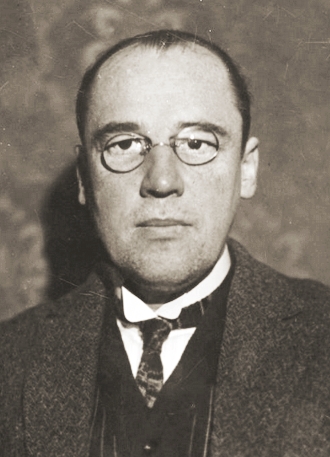
W Sierpinski

So, Warsaw (and Poland more generally) has this massive history of mathematical excellence that I know a lot about, but writing it would be a lot of effort. Plus I'd have to describe what they were doing. The guy above gave the first course dedicated entirely to set theory anywhere in the world! He's kind of a big deal. The mathematical skill of the Poles was sufficient that they were the ones to actually crack ENIGMA (they actually have a lot of crypto courses at the University of Warsaw, but I somewhat doubt that is a tradition dating so far back). So, one day I will probably idly write a history of Polish mathematics, forget to publish it and move to Korea.

Anyway, hope you're all having fun out there while I'm stuck in the actually acceptably warm Warsaw. Perhaps I'll remember this blog more this weekend, where I have a nothing planned but endless paperwork.