Friday, October 23, 2015

Today in deliberate misreadings: Politics And The English Language

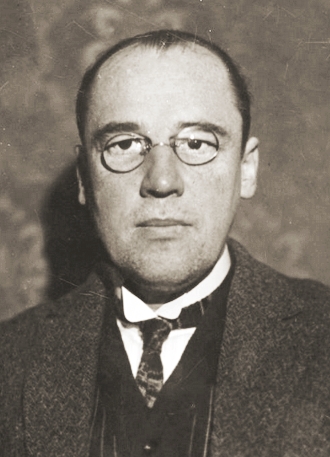
 George "The Animal Steele" Orwell

Everyone knows George Orwell wrote a great essay on political language. Hipsters (edit: I don't mean to attack this person specifically. The was inspired by someone I know personally) know that the essay is bunk, claiming stupidly that we should all write beige, colorless prose and always avoid the passive voice. The fact that I called them hipsters tells you where I stand. Yes, it is strange that Orwell should make us want to write as dully as ... The King James Bible. Gosh, it's almost like such a reading doesn't make sense when you think of it like that. Well, that's because it doesn't! One would think that linguists would understand the idea of qualifying phrases! Imagine if I wrote such trash about fluid mechanics:

 I've always been fascinated by vortex dynamics

"How stupid is Helmholtz's essay on vortex dynamics? If he were right, wingtip vorticies couldn't end in a fluid, so they'd have to extend all the way back to where the plane started at the beginning of time. That's ridiculous. I can't imagine the damage done to fluid mechanics by this illogical essay."

All I have to do is ignore that Helmholtz ever said "velocity potential" and I make him sound ridiculous. Yes, it's easy to sound smart when you cut out half the sentence ("Never use the passive ..." rather than "Never use the passive where you can use the active."). Plus, it lets you get out of having to use real data! Since you've created a totally artificial theory that nobody ever proposed, nobody will call you on it if you reject it badly after all. Heck, why not go further? Let's claim Maxwell never discovered Maxwell's correction to Ampere's Law, just by leaving out those parts of his books! It's fun!

In ur noospapers, writin' ur propaganda

Okay, now they've got me doing it. These kinds of arguments are well documented in Schopenhauer, and it is more fun to attack hipsters and George Orwell than it is to sit around in your underwear. I should have a sense of humor about things. If you do something as simple as read the essay, you'll notice that Orwell's praise is always toward the visual and metaphorical and away from the beige and standard. Orwell didn't say "When there is a gap between one's real and one's declared aims, one turns as it were instinctively to long words and exhausted idioms." but rather "When there is a gap between one's real and one's declared aims, one turns as it were instinctively to long words and exhausted idioms, like a cuttlefish spurting out ink.". Read those two sentences and tell me there's no difference. Or how about this dull, image-less prose taken from something Orwell himself thinks is worth publishing:

"When one watches some tired hack on the platform mechanically repeating the familiar phrases ... one often has a curious feeling that one is not watching a live human being but some kind of dummy: a feeling which suddenly becomes stronger at moments when the light catches the speaker's spectacles and turns them into blank discs which seem to have no eyes behind them."

What's that from? Oh right, that's from the very essay you just read! Orwell is throughout the entire essay calling for more colorful, more illustrated, more metaphorical/simile-heavy prose. He uses images constantly throughout the essay, and indeed throughout his writing. I wouldn't go as far as to say Orwell was a frustrated artist, writing because he couldn't draw political cartoons. That's G.K. Chesterton you're thinking of. But Orwell always had his eye fixed on creating an image in the reader's mind.

I didn't say anything about Orwell's deeper concern that avoiding metaphor and imagery allows one to deflect from what one is really writing about. I don't know that if Laski had to write about the Soviet in the way Orwell said that it would force Laski to think about what the Soviet was really doing and he would find it in himself to criticize them before Czechoslovakia. I'd guess that Orwell has a point but the psychological issue needs to be studied empirically. Do such studies exist?

Sunday, October 18, 2015

Sunday, October 4, 2015

If I Have Mine and You Have Yours, Do We Have Ours?

Let's play pretend. Let's say you're an earnest young music producer and you're going to make a star out of an earnest young talent. She's really good, Joni Mitchell or Kate Bush level. How do you capture her genius? Do you hire strings, really go balls out? Or is it more beautiful to capture her pure and unrestrained? Well, here's one piece of advice:


That's not helpful is it? Alright, well, here's what we think mathematically. This is a problem of "Multi-Objective Programming".


Single objective programming, or simple optimization, is pretty simple to understand (though in practice it can become quite difficult). You want to do ... something and you want to do your best. You wanna make the most money, or move the most people, or be the purest, or rock the hardest, or be the funniest, etc., etc. It was recognized by Newton that for smooth payoff functions, finding maximums and minimums was equivalent to finding the roots of derivatives (he wouldn't have phrased it like this). So all you have to do is have a root-finding technique, and there are very efficient ways of doing that. It's simple enough that reducing a design decision to an optimization problem is equivalent to solving it. I've actually done some work in this area, engineering stuff by optimization techniques.

Multi-Objective Programming is more complex. It's satire rather than just comedy - now you want to be as funny as possible and reach as many people as possible. Occasionally you're going to run into some trade-offs. How long are you willing to stray from the message for a laugh? How many laughs are you willing to sacrifice to get to the point? There's no longer any notion of a simple best, there's real trade-offs. How can we solve such a problem?


The notion of a "solution" to a problem with multiple objectives dates back to Hume, but has its first clear enunciation in the work of economist Vilfredo Pareto. Pareto was a very interesting person. He was at first a dedicated Free Market Liberal type and dedicated much of this part of his life to simplifying and extending the economic equilibrium theories of Leon Walras. He later decided that economic theories from Hume to himself left out the "irrational" aspects of human behavior. He believed that human nature was fundamentally non-logical, that political power was found in the vicious struggle of elites and that empirical study of sociology is what is best in life. By the end of his life, he was calling for releasing the hounds on anyone to the left of Mussolini - of whom he was very, very big fan. Hey, I said he was smart, not wise.

Well, Pareto's other beliefs aside, his proposal for the solution of multi-objective problems was very important innovation. A solution is called "Pareto" if improving in one aspect must mean detracting another. For the Joni Mitchell example, it would mean going beyond tasteful, jazzy backing to syrupy Mantovani backing (I don't hate Mantovani, just note that he'd be wrong for Mitchell). This isn't an optimum in the original sense -it can't be an optimum in the original sense. There's no longer a clear notion of best. It's a notion of stability of decisions. Imagine that Joni Mitchell had two producers, one who wanted bigness and the other honesty. Of course, much of what she does can please both producers - write a beautiful melody with lots of hooks and nice lyrics. But at some point, adding/subtracting some more strings will please one and not the other. Pareto's idea is not perfect. For instance, if Joni decides to completely listen to one producer and not the other, that idea is perfectly Pareto - even if it is wrong. To put it another way, let's say Mom bakes us a pie. If I take the whole pie, you can't get any without taking some from me. The distribution is Pareto - but not good.

The most important application of this idea, and Pareto's original application, was to the distribution of goods in a static economy. In this post, I discussed about how a highly unequal distribution of goods could develop from trade economy. Notice that at a Pareto stable point, trade effectively stops - Chamberlin stays the richest person. Nobody can make themselves better off without hurting someone (not necessarily Wilt, mind you). This has powerful implications. In fact, an economist named Francis Edgeworth developed a highly innovative iterative argument where trade people negotiate and renegotiate their contracts. Since only the set of Pareto equilbria are stable (this is a mathematical sticking point), they must land on one. This was, arguably, the first argument that an invisible hand could actually achieve a stable distribution, rather than the Walras/Pareto demonstration that one exists. Of course, this argument is also present in a purely verbal form in Hume. I've written about this before.

Well, I'm having trouble with my laptop battery, so we'll have to get into Pareto and dynamic economies some other time. See you then!

Uninteresting Note: I originally wanted to name this post "Economies Wobble But Do They Fall Down?" but that's about the stability of equilibria and not what an equilibrium is.

Thursday, October 1, 2015

Solo Duke


Well, I wanted to write a wise post on some classic results about on (Pareto) stability of a growing economy (in short, cain't be done, son), but I couldn't think of anything to say that would be interesting. But then I saw this and of course anything I'd say would pale in comparison. I love that Duke starts with Fluerette Africain, a number he wrote (for Charles Mingus - Duke's best work was always specific) relatively recently to this recording. It shows Duke's influence from Monk, an influence that Duke thanked Monk for at every opportunity! (of course, Monk was deeply influenced by Duke as well - and first)

Coleman Hawkins & Duke Ellington

Well, I guess I should give my opinions on the essential Duke... nothing like judging great artists and great men. Well, I bend strongly toward the weird. Money Jungle - played by the trio of Duke Ellington, Charles Mingus and Max Roach - is definitely on the list. Music should have big personality, that was Duke's philosophy. Ellington At Newport is a better portrait of his general sound. Of course, one of his very best albums is his tribute to his long time music director and close friend Billy Strayhorn ... And His Mother Called Him Bill. But, of course, this doesn't feature Ellington's compositions. Billy Strayhorn's style is instantly distinguishable from Duke's, I don't consider myself a connoisseur and I've never once confused them in my life. Billy was better educated than Duke, and Strayhorn's style was ... educated, urbane melancholy. Ellington tended to break rules more innocently and with more dramatic effect. Of course, & John Coltrane and Meets Coleman Hawkins are great for post-bop enthusiasts like myself. Some might argue that Coleman Hawkins and pre-bop rather than post-bop. The use of "rather than" rather than "as well as" is their only mistake.

 I think this is the right orchestra...

 Once more modern albums have got you used to the Ellington genius, try The Blanton-Webster Band, which captures his 40's sound. People not used to 40's sound should not jump into the old material with both feet. Good recording technology is a blessing. Well, that's my attempt to give my favorite albums. Of course, there's collections galore, but I can't sort through all those.


I also wouldn't try to introduce someone to 40's music through Ellington - it was too innovative. It's a double whammy of intricate compositions and old fashioned sound. I'd try the great Louis Jordan, though it might trick people into thinking music in the 40's was any good. Good place to start, other than the earlier links, is his classic story of getting beat up and arrested at a raucous party.

Thursday, September 24, 2015

Update


 So, if you accidentally read this blog, you might have noticed a couple posts ago I complained about being in between jobs. Well, almost as soon as I wrote that I got an offer to work at the Polish Academy of Sciences, and the expense and stress of moving (among other more private matters) made me forget that I had a blog. As always, it was remembering that I liked Steve Reads that reminded me that I had all this half written junk.


I've only now been in Warsaw for about a week, so I won't give any half digested first impression crap. Okay one: is there really a pho restaurant in every university district in the world? Clearly, this implies that college is the right place to go. I guess should count myself lucky.

W Sierpinski

So, Warsaw (and Poland more generally) has this massive history of mathematical excellence that I know a lot about, but writing it would be a lot of effort. Plus I'd have to describe what they were doing. The guy above gave the first course dedicated entirely to set theory anywhere in the world! He's kind of a big deal. The mathematical skill of the Poles was sufficient that they were the ones to actually crack ENIGMA (they actually have a lot of crypto courses at the University of Warsaw, but I somewhat doubt that is a tradition dating so far back). So, one day I will probably idly write a history of Polish mathematics, forget to publish it and move to Korea.

Anyway, hope you're all having fun out there while I'm stuck in the actually acceptably warm Warsaw. Perhaps I'll remember this blog more this weekend, where I have a nothing planned but endless paperwork.

Sunday, June 21, 2015

Nozick, Roemer and Thou: Or, Only Equilibriums Equilibriate

So, this is my fluffy insubstantial post about the distribution of wealth, justice and injustice, and the only practical goals of all possible political philosophies. Soon I'll be free to write about deep issues like the flow between two rotating cylinders.

Anyway, who are the Roemer and Nozick of the title? I'll give 'em a lil' blurb.

Robert Nozick

Robert Nozick was a philosopher from New York who did most of his life's work at Princeton. I've read four of his books and enjoyed three. The one's I have read are Philosophical Explanations, The Examined Life (this is the one I didn't like), Socratic Puzzles and Invariances. I think the last one in particular got at something really neat, a good definition of objectivity. I'd like to state it like this. A statement is objective if it's meaning does not change under the kinds of permutations relevant to the discussion. He fleshes out this intuition well. Nozick considered epistemology to be his life's work - or at least that's what he says in all three books. His goal was to make a real, philosophically rich epistemology out of decision theory and possible world semantics. This was also David Kellogg Lewis's goal, but Lewis was rather more technically proficient and Nozick was more interested in the traditional philosophical side of things. Anyway, his first book was Anarchy, State, and Utopia, a book about political philosophy. His idea was to develop a novel defense of small state libertarianism. He argued that it could be justified even if it created, for instance, massive inequality. His basic idea was the idea that if every step on the path was good, then the destination is holy. I'll go over this in more detail in a bit.

John Roemer

John Roemer is an economist of the top rank - also, an Analytical Marxist. He's a fellow of the Econometric Society, the Guggenheim Foundation and the Russell Sage Foundation. He has written many important papers, three articles in Palgrave and several books, though I've only read one. The book I read was Free To Lose. He also once wrote a book about how we could replace corporations with co-ops and get all the upsides of market competition. He's rather more clever than Nozick, but that only gives Roemer the advantage if he is right. One of Roemer's accomplishments developing a simple model in which an unequal society where every member is given the same choices develops classes (and therefore further inequality) because of the initial inequality. In addition to the important advantage of making sense of the idea of class without reifying it like so many socialists do, this plays an important role in how we ought to think about inequality.

Wilt Chamberlin

So, the issue today is Robert Nozick's idea that inequality can be morally justified on the grounds that every action that leads to inequality might be justifiable (Nozick, who is very witty, calls these "capitalist acts between consenting adults"). He gives the following example. The people of Philadelphia are more than willing to give their money - of which they have little - to the Warriors organization - which has much - because they want to see Wilt Chamberlin's athletic feats. Clearly, we don't disapprove of actions just because they collectively result in inequality

Yes, that is Arnie in the middle there.

With a little fiction, the thought experiment can be made more clear and its importance will shine through. In this alternate Philidelphia, everyone has the same amount of money, let's say $1. Wilt Chamberlin decides to hold an expo. People pack in from miles around and give Wilt a token of their appreciation, let's say $.01. If 100,000 people see the expo, Wilt now has $1001 and is the richest man in Philadelphia. It would be ridiculous (and, in the end, require cruelty) to stop people from seeing Wilt. One can argue that the right thing to do here is to redistribute by taxes and transfers, and that one can do this without violating moral strictures too badly. But this misses the point. What is important about this example is not Wilt Chamberlin, but that the world gravitated to a place where there was a richest person, even though it started out with everyone being monetarily equal. The distribution of wealth that society aims for must be a stable equilibrium. If equality is not stable, then it will not happen. Was Pareto right to think that a power law distribution was the only possible outcome? I deeply doubt that, but the idea must be confronted.

Well, what does Roemer say? First of all, Roemer shows that equality is a stable distribution of wealth under capitalism if we presume that people are equal, so that the Wilt Chamberlin example can't work (why not? Because then everyone could hold an expo and Chamberlin couldn't stay the richest man in Philly). Second, Roemer shows that inequality can result from inequality of resources and limited menus for employment even if everyone is equal, so that there has to be at least two components to inequality, not just one's own personal qualities as Nozick's example suggests. .

This is a huge spoiler

It is clear that Larry Page and Sergei Brin are clever guys, but are they cleverer than, say, Terence Tao? Certainly they are much richer. If you put a gun to my head and told me to invent a search engine, it probably would have looked like PageRank even before I knew what that was. But the fact is, there is more than PageRank (and their brains being smart enough to conceive of PageRank) to their wealth. In otherwords, Page and Brin aren't rich just because of their Wilt Chamberlin-esque personal qualities. They are also able to parlay their wealth by taking advantage of more opportunities than a less rich person. They are rich - partly - because they are rich. More positive liberty has given them more negative liberty, and the negative liberty can be parlayed into positive liberty. That needs to be taken account of in any discussion of inequality and it is just ignored in Nozick's thought experiment.

Roemer even goes as far to call the Chamberlin example "socialist inequality" (which is unfair, since they didn't articulate it). You might notice this section was a lot drier than Nozick's. Romer's biggest problem is, I think, the fact that he has imbibed these models so deeply that he cannot write without them. Maybe I'll think of a way to illustrate this better.

Roemer ignores the extent to which inequality is created by market failures, at least analytically. Nozick argues that regulation leads to industry dominated regulatory bodies that make markets fail more, but he 1) only addresses old fashioned command and control regulation 2) fails to come to terms with copyrights, trademarks etc. which cause damage without being "regulatory bodies" and 3) says that these generally lead to a rise in price which is contrary to the facts (George Stigler and Milton Friedman could barely measure a rise in electricity prices and later analysis has suggested that there actually was a positive effect).

All of this means that inequality actually has at least three components: personal qualities, feedback from greater choices due to wealth and market failure. Nozick can sort of justify inequality source number one, but the other two are unjustifiable even on his account. Anyone who wants to morally justify inequality needs to justify all three at least.


Friday, June 19, 2015

Didn't Write LOL


Alright, you might have noticed that I didn't post twice yesterday and that this blog title is not the promised post on Fourier Analysis. Well, my life got in the way. I'm still going to post every day, but I'm not going to write a big substantive until next Tuesday.


If I post any more YouTube videos, this blog is going to become a Twitter feed. Maybe I should review something I've read? I haven't been reading like I was when I started this blog. I could do a review of the last thing I watched, but I don't think the internet likes The Rockford Files as much as me - though you should 'cause it's great. And I'm also at risk at becoming a Tumblr if I continue to lack content the way I do.


Alright, how about this: is there any correlation between money spent on a TV show and its quality? Here's a good list, kind of interesting to think about. I think modern sit-coms just look awful. Big empty fishbowls. Back in the old days, All In The Family and its ilk had a certain grittiness to their look, like an Angry Young Man play. Whether that is good or not is up to you. It's important though to compare apples to apples, sitcoms like Friends and The Big Bang Theory (shows I don't watch, but have friends that do) cost a fortune because the main actors are so popular that they can be paid ~$1 million an episode. That can't be compared to a cool looking show like It's Always Sunny in Philadelphia.

Great Promotional Bebop Art From Character Designer Toshiro Kawamoto.

Interesting fact: anime is dirt cheap to make. This is the real reason they can concentrate on the safe but small (and pretty horrible) "otaku" market (which wants - thinks it wants - nothing but more of the same, but more fetishized). Each episode of Bebop was made on a budget of ¥20 mil, which is about $230,000 (taking into account inflation). Each episode of a comparable American series in terms of looks, Avatar: The Last Airbender, cost $1 mil to make. Of course, there were other costs to make the series as a whole, but that's not going to change the overall story. Sequel series Avatar: The Legend of Korra costs $1.7 mil an episode.


In his book Starting Point, the great Hayao Miyazaki blames Osamu Tezuka for this (he says Tezuka was willing to work with low budgets because he conceived of animation as a side gig to comic books). But I wonder if people would be willing to make risky shows like Bebop if they had to pay full price. It's a great book, worth checking out. Miyazaki is a very interesting person, much more pessimistic (especially politically, as Miyazaki is an environmentalist and a pacifist) in person than on the screen. Reading his regrets, his triumphs, his frequent attacks on the lack of emotional depth in other Japanese animation and his ambitious plans for his movies is very impressive and interesting. He writes about his inability to understand his father until it was too late, his love of his crappy first car and his relationship with the industry in a very honest way. Highly recommended.

Hey, that's kind of a book review of the last thing I read! I guess this blog isn't totally content free!